
Top Tips to Season Cast Iron Skillets
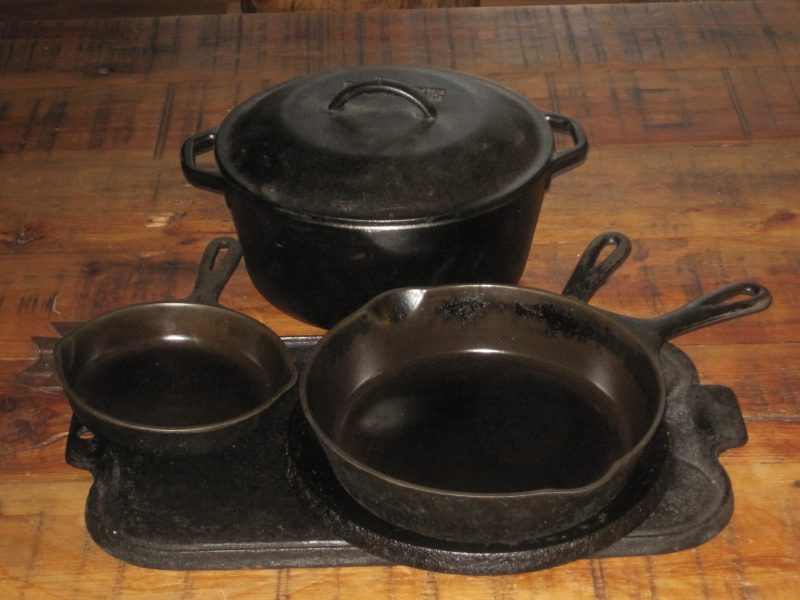
Cast iron skillets and griddles have been around for a very long time. They were first created in the early 1700s.
These pans are solid, durable, and very versatile, but they do need some special care. Discover the secret to maintaining this heavy cookware and uncover the best way and the best oil to properly season these pans.
The main concern or problem with these types of pans is that iron cookware can dry out and lose its seasoning, which means everything sticks in the skillet.
How to Clean and Season a Cast-Iron Skillet
But, with a little extra care and the proper seasoning process, these pans will give you decades of use! If you do not have any iron cookware, take a look at this. review of Lodge Cast Iron Pans, Griddles and Skillets!
IRON SKILLETS & COOK WARE
- HISTORY OF THESE PANS ~ QUICK PRINTABLE INSTRUCTIONS BELOW
- HOW TO CLEAN “SEASONED”
- BEST OILS TO SEASON
- HOW TO SEASON A SKILLET
- CLEANING OFF BURNED FOOD
- HOW TO CLEAN A RUSTY SKILLET
- DON’T DO THESE THINGS
- STORAGE
- CLEANING WITH SALT & POTATO
- ENAMEL COOKWARE
- HEALTH CONCERNS
- PROS and CONS of USING THESE PANS
Love Cast Iron Cookware but don’t know much about it?
Here is some helpful information!
#1 HISTORY OF CAST IRON SKILLETS
I love the sturdiness and durability of this type of cookware. It can be used in the kitchen, on the grill, with a wood cookstove, or over a campfire without any problems.
Even though iron cookware is durable and heavy-duty, it still needs to be taken care of in order to get decades of use.
A common reason that many people do not like these pans is that they cannot simply be put in the dishwasher or scrubbed out with dish soap.

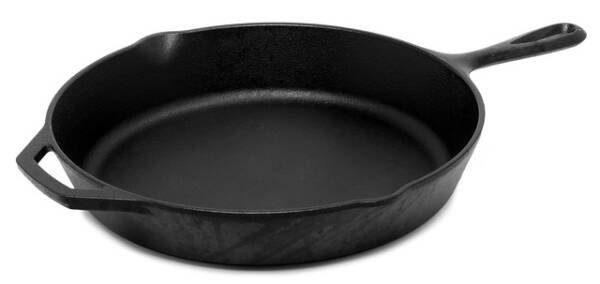
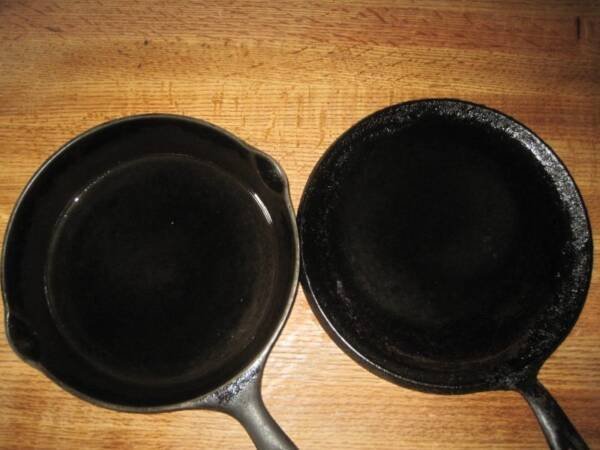
Iron pans & skillets should be shiny black on the inside + easy to clean.
#2 SIMPLE STEPS TO CLEAN CAST IRON
FIRST OF ALL…NO SOAP: JUST USE HOT WATER.
There seems to be a lot of misinformation on how to clean a cast iron skillet or pan. As was mentioned above, cast iron cookware has been around for centuries and is not difficult to keep in good working order.
The truth of the matter is that these pans, griddles, Dutch ovens, and skillets are not hard to take care of. But there is definitely a right way and a wrong way!
Once the pan is properly seasoned, clean-up is a snap. So, if you have a dried-out or sticky iron pan, read on.
I will go over how to properly season cast iron in Step #4. But make sure to read this section first on the proper cleaning method for these pans and skillets.
After sautéing, frying, or baking in your skillet or pan, simply allow the pan to cool slightly, then scrub with a brush under hot running water. Or, use a natural type scrubbie.
Cleaning Cast Iron Cookware with Hot or Warm Water
The whole idea is that a properly seasoned pan, skillet, or griddle will rinse clean with just hot water and a little scrubbing. It does not need any additional soap or detergent.
You may even pour hot water into your skillet or pan and simply bring it to a gentle boil. Scrub lightly to loosen any remaining food. Allow to cool before rinsing in hot water. Towel dry.
Cleaning a Sticky Pan or Sticky Skillet
Boiling water is ideal for cleaning sticky residue out of your pans, skillets, and griddles. You may have to repeat this process several times to clean a very sticky skillet.
You want the surface of the pan to be smooth.
I have seen people say it is okay to use dish soap to clean these seasoned cast iron pans, but I totally disagree. These cast iron pans can go from the kitchen and then into the hunting camp.
Always remember that simple hot water is best with no soap to clean your cast iron cookware!
Or, you can try this CAST IRON CLEANING KIT.
Cast iron cookware has been around for a long time.
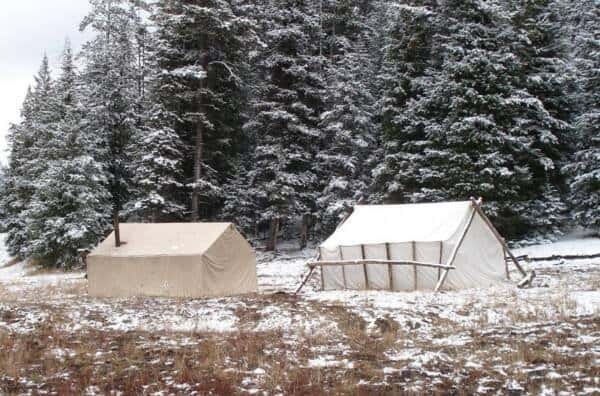
Long ago, cast iron cookware was used exclusively in work camps, hunting camps, and on the range because of its durability.
These pans had to be easy to care for and easy to keep clean in an efficient way without the modern convenience of dish soap.
In a rustic camp environment, they were simply cleaned with boiling water and towel-dried.

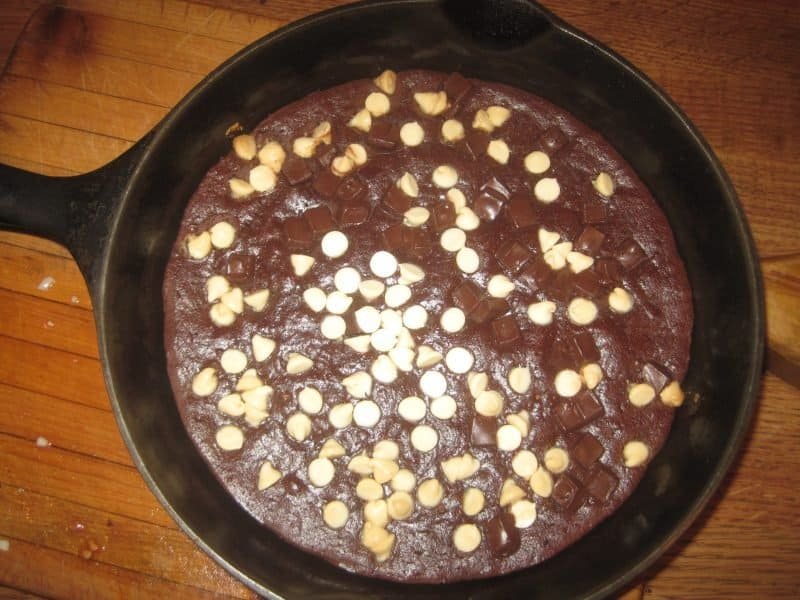
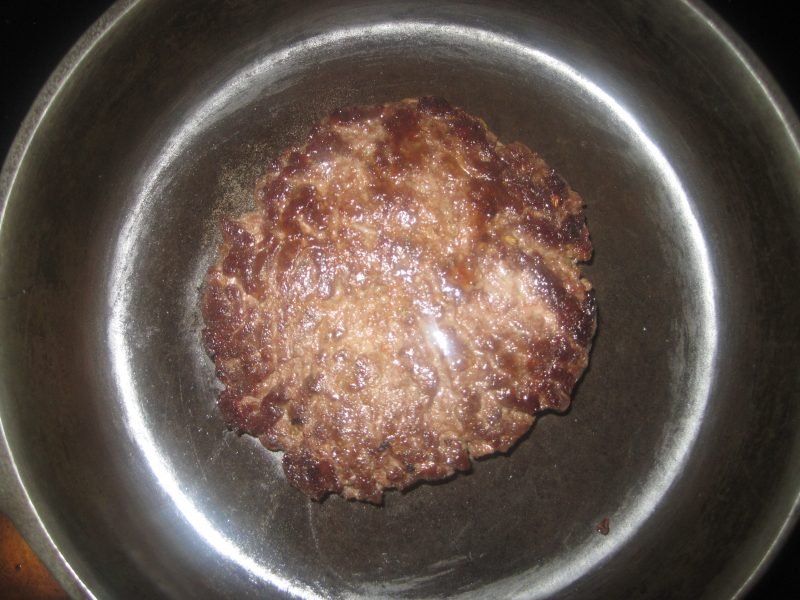
I love using my 10″ skillet for my Roasted Potato and Vegetables side dish. Cast iron skillets and burgers are a perfect combination!
It’s pretty simple and straightforward if you keep your cookware well seasoned! More on that in a minute. Let’s go on to how to season and how to use a cast iron skillet.
Cast iron pans, skillets, and griddles can go from gas ranges to electric ranges to wood cookstoves and into the oven. They are super versatile.
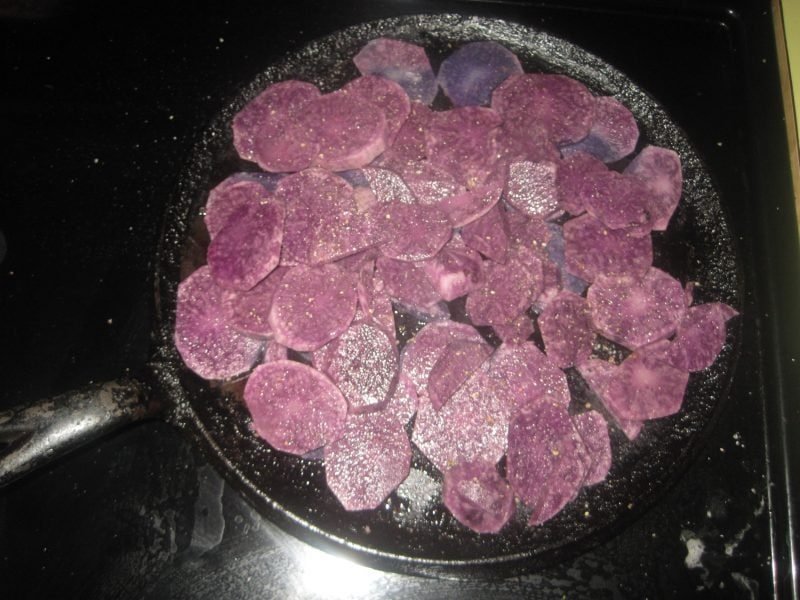
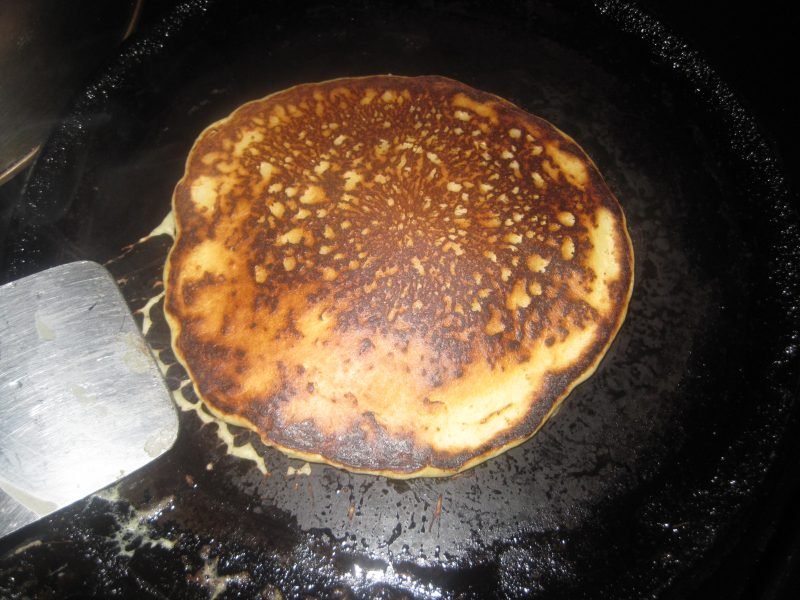
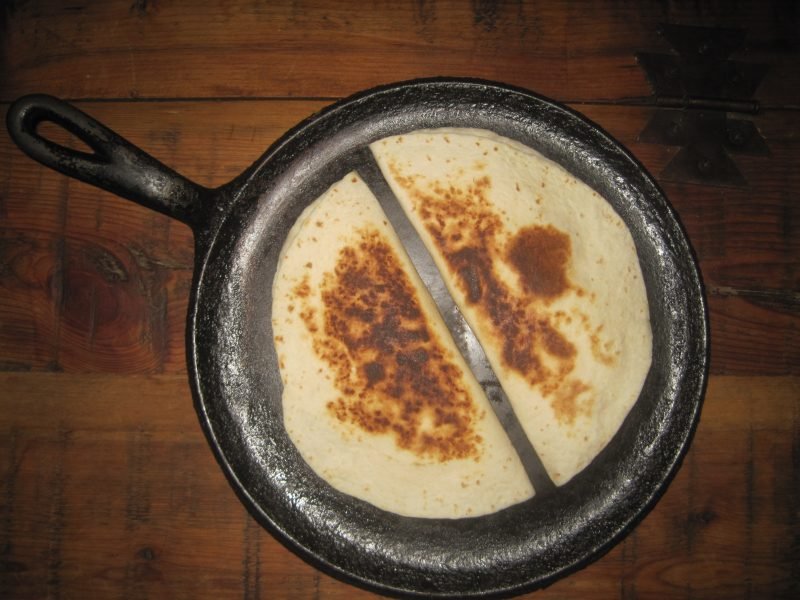
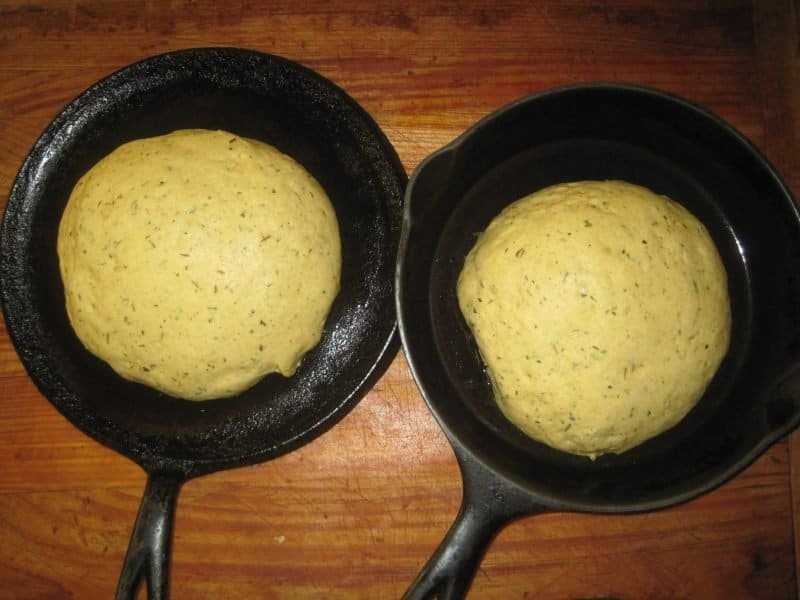
Next, we will be going over the best way to season a cast iron skillet, pan or griddle.
Important Note: Newly purchased cast iron pans come pre-seasoned. You will not have to season them initially, but you might need to re-season them in the future.
It is good to know how to re-season this type of cookware.
There are also enamel coated cast iron pans such as Le Creuset cast iron skillets and cookware.
#3 BEST OIL TO SEASON CAST IRON COOKWARE
In the olden days, folks simply used what they had on hand to season their skillets and pans, which was typically bacon grease or side pork grease.
Bacon grease or animal fats can go rancid, which is why they are no longer recommended in the modern kitchen.
Today, we have many more choices of vegetable oil to use for seasoning, with some being better than others. Many kitchens have canola oil, corn oil, and olive oil, but these are not the best for seasoning.

So, many people are asking can i season my cast iron with avocado oil. That is a great question! And, the answer is yes! I use a non-GMO avocado oil which I feel is the very best oil for seasoning cast iron!
Avocado oil is actually my preferred oil because it has a high smoke point of 570°F, which makes it perfect for seasoning.
Low smoke-point oils should not be used because they will burn at high temperatures. It is advisable to always use non-GMO oils.
This low smoke point is the main reason why seasoning with flaxseed oil is not a good idea.
Flaxseed oil has many wonderful qualities and benefits, but seasoning iron pans and griddles with it is not one of them.
For further reading, you may find this of interest: healthy cooking oils.
Cast iron pans and skillets will look dry and tired when they need re-seasoning.
Here’s how to bring them back to their shiny surfaces!
#4 HOW TO SEASON CAST IRON COOKWARE
Cast-iron pans, skillets, and griddles are slightly porous. When properly seasoned with oil, the cooking surface as well as the outside of the pan, skillet, or griddle is sealed.
By properly seasoning your cast iron, you will create a wonderful nonstick cooking surface that is very easy to keep clean.
The heating of the oil in the pan produces a coating that discourages food from sticking. It is actually sealed.
OVEN METHOD:
For unseasoned cookware, oil the inside and outside of the pans.
To re-season cookware, simply oil the inside of the pans.
- Preheat your oven to 375 degrees.
- Give your pan a good scrub with hot, soapy water to make sure it is clean (this is the only time that you will use any soap in your pans!).
- Allow the pan to dry.
- The inside of the pan should have a smooth surface.
- Thoroughly oil the inside and outside of the pan with avocado oil using a paper towel or small soft cloth. You do not need to use too much oil. Use just enough to thoroughly coat the inside of your pan.
- Wipe up any and all drips.
- Place the pan in the oven on the middle rack with foil placed on the lower shelf to catch any drips.
- Heat for approximately one hour.
- Grab hot pads and remove the pan from the oven.
- Allow the pan to cool on a rack or simply turn off the oven and allow the pan to cool in the oven.
- Wipe clean with a paper towel to absorb any excess oil.
QUICK STOVE TOP METHOD:
Re-SEASONING the INSIDE of an IRON SKILLET on the STOVE TOP:
- Scrub your pan with hot, soapy water to make sure it is clean (this is the only time that you will use any soap in your pans!).
- Thoroughly oil the inside of your pan with avocado oil using a paper towel or small soft cloth.
- Wipe up any and all drips.
- Turn your burner to low and place the pan on it.
- Slowly increase the heat to the smoke point.
- Grab a hot pad and remove the pan from heat.
- Allow the pan to cool on a rack.
- Wipe clean with a paper towel to absorb any excess oil.


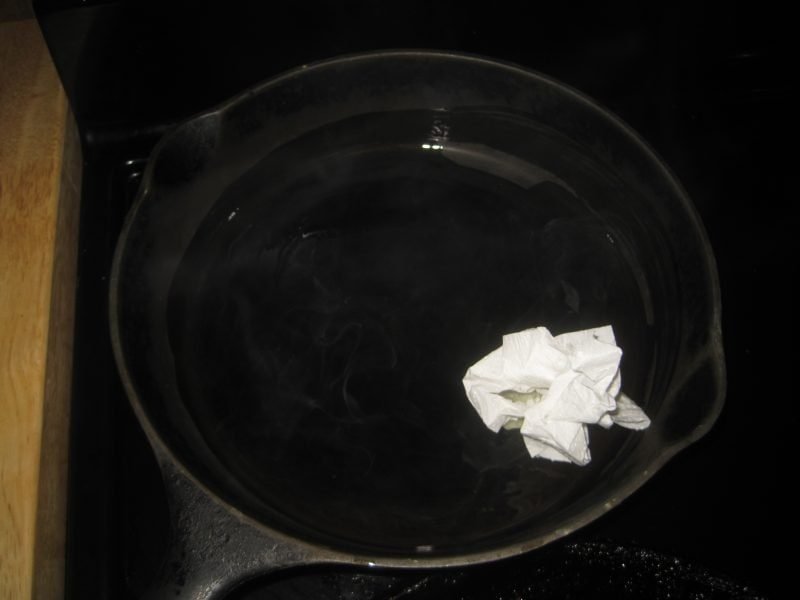
NOTE: This method is for those that do not have access to an oven and that need a quick method to re-season a iron skillet or pan.
#5. CLEANING OUT BURNED FOOD
Cleaning burned food from your iron cookware is fairly simple. Simply fill your pan with hot water and bring it to a boil.
Allow your pan to soak for approximately 10 minutes, then gently scrape with a spatula to loosen the food.
Rinse with hot water and use a brush or scrubbie to completely clean the pan.
Dry with a towel and store. If your pan appears to be “drying out,” then follow the steps to re-season it to bring your skillet or pan back to its black, shiny interior.
#6. HOW TO CLEAN & SEASON A RUSTY PAN
If you find a rusty pan or skillet at a garage sale or thrift store, there are a couple of great ways to clean out the rust before seasoning the pans.
- Simply use steel wool, dish soap, and hot water. Remove all rust with the steel wool. Then rinse with hot water. Towel dry and go back up to Step #4 on How to Properly Season Your Iron Pan.
- Another way to remove the rust from these pans is to use a rust eraser or magic sponge. These should be available at your local hardware store.
#7 DO NOT DO THIS TO CAST IRON
These pans are great, but there are a few things that you should not do to this type of cookware.
NO TOMATOES, TOMATO-BASED PRODUCTS, or ACIDIC FOODS.
Do not heat, sauté, fry, or cook with any tomato-based foods in cast iron. The acid in tomatoes reacts with the iron, causing off flavors.
The bottom line is the acid in tomatoes and tomato-based products removes the seasoning in the pans.
NO VINEGAR
Never use any type of acid in your skillets. So, this means no vinegar or vinegar-based marinades.
NO DISH SOAP
I know some may disagree with me, but I do not recommend using dish soap on any cast iron.
As it was mentioned above, simply wash your skillets, pans, and griddle with hot water after allowing them to cool slightly.
Hot water and a natural hand-knit scrubber or brush are all that is needed.
NO SOAKING YOUR PANS IN WATER
You may put hot water into your pan to soak for a little while but never plunge your pans in a sink full of water and just leave them there. IRON will rust.
#8 STORING CAST IRON PANS
NO SOAKING YOUR PANS IN WATER
Iron rusts, and so it makes sense that these pans and cookware can also rust. Take the necessary precaution of always making sure your cookware is totally dry before storing.
If necessary, place a towel or cloth between pans when storing, but the most important thing is that they are dry.
#9 CLEANING CAST IRON PANS WITH SALT & A POTATO
There is an older method for cleaning iron pans. It calls for using salt as the abrasive agent and the potato as the scrubber.
If you do not have a steel wool pad to remove rust, then try the salt and potato method.
Plus, it may just be fun to try an old-fashioned method:
- Wet the inside of your skillet.
- Sprinkle heavily with salt. You should use kosher salt without added iodine.
- Cut a potato in half.
- Scrub the inside of the pan or skillet.
- Rinse with hot water.
- Return to Step #4 to properly season.
#10 EMAMEL COATED PANS
In recent years, black iron cookware has been coated with enamel. This enamel coating protects the pans, skillets, and griddles from all types of foods.
This type of enamel coating eliminates the need for any type of seasoning or re-seasoning.
Enamel pans are perfect for all types of cooking including boiling water for pasta.
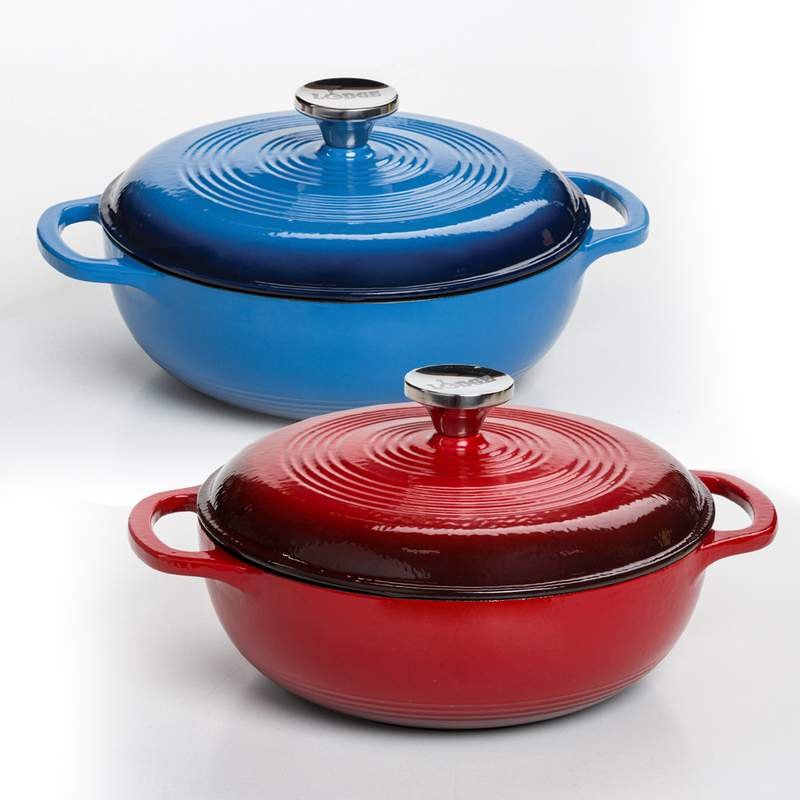
Lodge Enameled Cast Iron 3qt. Dutch Oven -…
Lodge® took the many benefits of cast iron and combined them with the beauty of por… [More]
Price: $69.99
#11 HEALTH CONCERNS
If you have any restrictions on your iron intake, it is advisable to discuss this type of cookware with your doctor.
Some people’s bodies hold on to iron and even grab excess iron, so please double-check before using this type of cookware if you have any iron issues.
#12 PROS AND CONS OF HEAVY IRON COOKWARD
PROS:
- Durability—very stout, not flimsy.
- Safe Material: Made of iron with no dangerous coatings.
- Versatile—great for sautéing, frying, and baking.
- Adds iron naturally to the foods prepared in this type of cookware.
- Retains heat longer than stainless steel.
- Is easier to clean than most other cookware.
- Iron cookware has stood the test of time.
- Vintage Appeal for the Modern Kitchen.
CONS:
- Heavy – may be too heavy for some people.
- The handles get hot and you must use appropriate hot pads or silicon hot handle holders at all times.
- Need some special care like periodic seasoning and re-seasoning.
- Special precautions like not using tomato-based products, vinegar, or any acids.
- Not to be used for boiling pasta or any type of extended boiling of water.
- Takes longer to heat up than most thinner-weight cookware.
- Must gently heat before adding foods so they do not stick.
- DO NOT drop these pans as they will break tile floors.
- Be very careful with iron pans on glass-top stoves and ranges.
- These do not go in the microwave.
I hope you enjoy your cast iron cookware as much as I have enjoyed ours!
There You Have It on How to Clean a Cast Iron Skillet
The next time you see a tired-looking old rusty skillet with black residue on it, just know it can be restored to its original condition with a little elbow grease, a thin layer of oil, and just enough heat!
HOW TO SEASON A CAST IRON SKILLET:
SEASON CAST IRON COOKWARE
Materials
- AVOCADO OIL
Tools
- Cast Iron Pans
- Avocado Oil
- Paper Towels or
- Small Soft Cloth
- Oven
Instructions
HOW TO SEASON A CAST IRON SKILLET:
OVEN METHOD:
FOR UNSEASONED CAST IRON: oil the inside and outside of the pans.
TO RE-SEASON CAST IRON: simply oil the inside of the pans.
- Preheat your oven to 375 degrees
- Scrub your pan with hot soapy water to make sure it is clean (this is the only time that you will use any soap in your pans!)
- Thoroughly oil the inside and outside of the cast iron with avocado oil using your a paper towel or small soft cloth
- Wipe up any and all drips
- Place the cast iron pan in the oven on the middle rack with foil placed on the lower shelf to catch any drips
- Heat for approximately one hour
- Grab hot pads and remove pan from oven
- Allow the cast iron pan to cool on a rack ~or ~ simply turn off the oven and allow the pan to cool in the oven.
- Wipe clean with paper towel to absorb any excess oil
QUICK STOVE TOP METHOD:
Re-SEASONING the INSIDE of CAST IRON SKILLET on the STOVE TOP:
- Scrub your pan with hot soapy water to make sure it is clean (this is the only time that you will use any soap in your pans!)
- Thoroughly oil the inside of your pan with Avocado Oil using a paper towel or a small soft cloth.
- Wipe up any and all drips
- Place the pan on your burner and turn on low
- Slowly increase the heat to the smoke point
- Grab a hot pad and remove pan from heat
- Allow the cast iron pan to cool on a rack
- Wipe clean with paper towel to absorb any excess oil
This method is for those that do not have access to an oven and that need a quick method to re-season a cast iron skillet or pan.
PIN IT FOR LATER!




I have a rusted out iron skillet that is just waiting for me to figure out how to fix it. I’m so glad I came across your post. My grandma and my mom always made roast and cornbread in the cast iron skillet! Nothing better! Thanks for the tips and I never would’ve known to use Avocado Oil!
Hi Melissa…..so glad you found this information helpful!!! I love my cast iron pans & skillets! Plus, glad to share the information on Avocado Oil which I think is fantastic. I use Avocado Oil all the time for cooking, baking, sauteing + to season all my cast iron cookware. Thanks for writing!
This is a very thorough article you’ve written. I love using cast iron, and our skillets are our main cooking pans. We also love our Dutch Oven.
I will be linking this post to my post on Cooking with Dutch Oven in the Campfire!
https://www.ridgehavenhomestead.com/dutch-oven-cooking-in-the-campfire/
Blessings!
Laurie
Hi Laurie,
I am so glad you found this information helpful. I am definitely like you with loving our cast iron skillets and griddle. My favorite sauce pan and stock pots are enameled cast iron. Thank you for linking my post to your Cooking with Dutch Oven in the Campfire….your Dutch Oven Cooking post and photos are wonderful. You have shared some great ideas. I really appreciate you taking the time to write! Thanks!
I love my cast iron pans 🙂 I have an old one that needs to be cleaned and reseasoned. This post will come in handy!
Hi Lisa, yes, I agree, I love my cast iron pans, too! They are my go-to cookware almost every time. Hope your old cast iron skillet comes out good as new! Thanks for reading!
I’ve never heard of the salt and potato trick! I’ve used salt before but the potato would certainly save my hands from all the scraping.