Planting a Bee Garden for a Healthy Harvest

By planting a bee garden, you will be attracting bees to your landscape and helping to increase their population. Bee gardens are both beautiful, productive and functional.
Pollinators, especially bees, are essential for pollinating plants so they will be able to produce food and flowers. Find out why bees are so good!
Before you start planting, it’s a good idea to check with your local Natural Resources Conservation Services. Here’s how to find your local NRCS Office.
They will provide information about pollinators and invasive plant species in your area. This is something we all want!
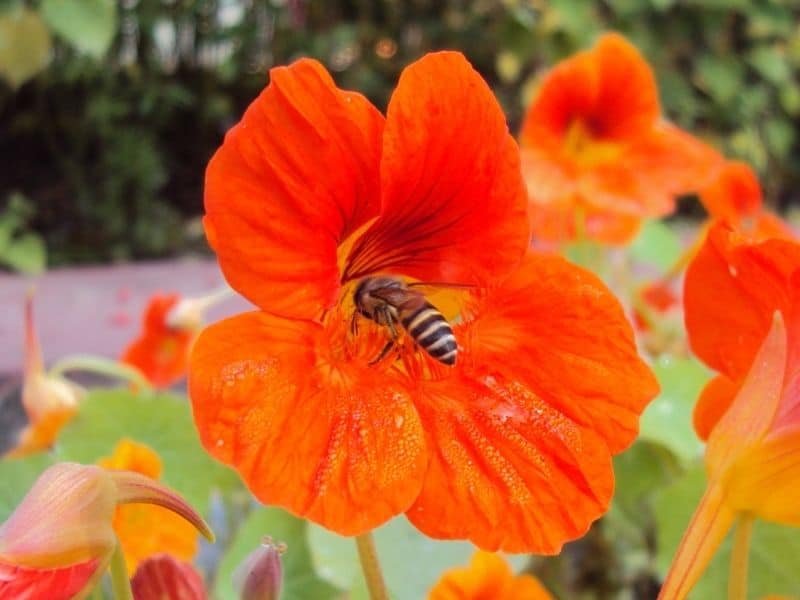
Planting a Bee Garden
The key to a thriving bee garden is to have a wide variety of plants, so something will be in bloom from early spring until winter.
Depending on the winter weather in your region, you may be able to keep pollen-rich plants alive and thriving during the winter months, too.
The more pollen-producing flowers that are growing in your landscape, the better. Planting a bee-friendly flower garden helps encourage healthy pollination for fruits and vegetables.
Plus, a bee-friendly flower garden helps encourage an increase in the bee population and even hummingbirds!
Learn how to make the very best and easiest hummingbird food recipe here!
Must Sure to Read this Important Information on non-native invasive plants in the USA prior to planting your flowers, shrubs or vines. Take a look at the additional links for further information.

Create groupings of the plants so the bees will easily see the colorful blooms as they are flying overhead and will come down to check them out.
Perennial Natives
Native perennial plants have adapted to a particular climate and can often be found growing wild .They will return for years without being replanted.
Make sure to check out the link below to find the native plants for your region and location.
>This is a must-have Native Perennial Plant Finder by Zip Code.
Perennial natives are the go-to plants for the native bees in your area. Incorporate native plants into your bee garden to attract the local bees. Learn more about how to grow a perennial flower garden.
If your landscape has a natural woodland section, plant the bee garden as close to the wooded area as possible.
This will provide bees with a natural habitat as well as native plants to gather pollen from.
Vining plants, like honeysuckle, passion flower, and wisteria, will climb the nearby trees create an irresistible pollen buffet for the bee garden.
Make sure to double check on non-native invasive species before planting any ornamental flowers and plants. For example: the American Wisteria vine is okay to plant but the Chinese Wisteria is not as it is a non-native invasive species. Read more the on Chinese vs American varieties of invasive wisteria.
This same information goes for honeysuckle too! Make sure to only plant a safe non-invasive variety of honeysuckle plants.
If you are interested, please take a look at these lists of native plants that will attract bees by region.
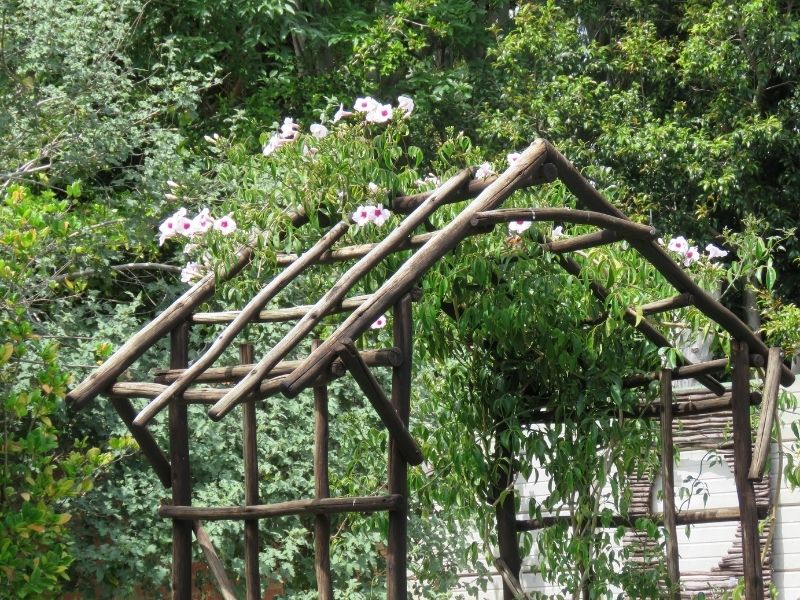
If you don’t have a woodland area suitable for growing blooming vines, consider installing a pergola or archway in the bee garden area. They will support the vines, and the blooms will attract the bees.
Find pergola kits that may work for your open space!
Also Consider:
>Timeless Garden Quotes to Make You Smile
>How to Grow Sunflowers | Gardening 101
>How to Make Compost Tea for Your Garden
>Ultimate Guide to Heirloom Seeds
Plant A Wide Variety
Bee gardens need flowers that will last for months, with new blooms opening throughout the day. Discover a great overview of the best variety of perennials for your flower garden.
Plant morning glory for early-feeding bees, which typically begin their feeding frenzy in mid-morning and continue feeding until mid-afternoon.
Plant a colorful variety of flowers that produce tubular-shaped blooms that are filled with pollen.

For maximum color display, group bloom colors together. Some bees are more attracted to certain colors than others.
Red blooms seem to be the favorite of most pollinators. Also plant some flowers that produce flat, open blooms so they can rest while they eat.
Don’t use chemical pesticides on the plants, only organic and natural pest control.
Spring Blooms

For early spring blooms that are rich in pollen, plant apple trees, Bradford pear trees, tulips, Lungwort, Jacob’s Ladder and Korean Lilac.
Also, consider Bellflower, Blue Bells, Potentilla, Daffodil, Lily of the Valley, Winter Aconite, and Crocus.
Spring offers a wide selection of trees and flowers that produce pollen-rich blooms, so it’s easy to have something blooming in the landscape this time of year.
However, save room for plants that will produce pollen the rest of the year, too.
Summer Blooms
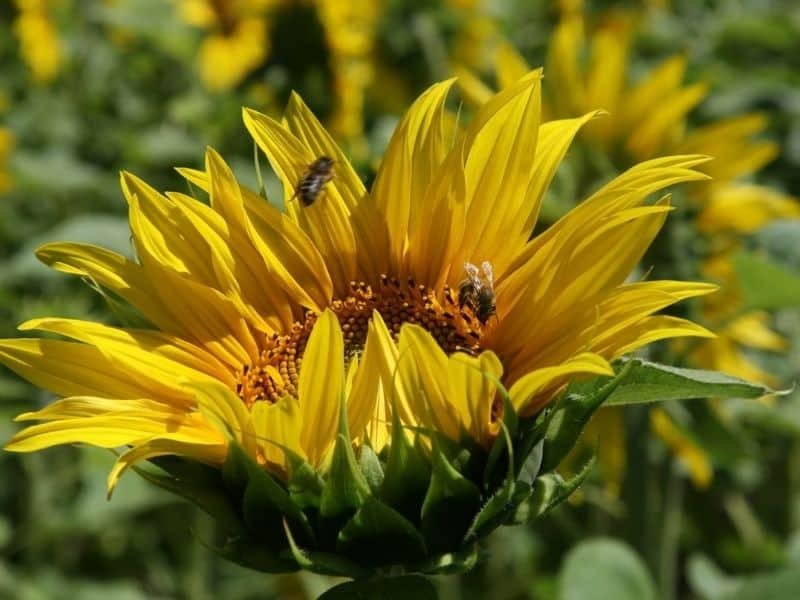
Select plants that are drought-tolerant for easy-care and continuous blooms during the summer months.
Bee Balm, Bugbane, Clematis, Catmint, Coneflower, Foxglove, Sunflower, Salvia, Dianthus, Lavender, Poppies, and Russian Sage are a few of the pollinating bees’ favorites.
Also, discover the importance of hand-pollination of plants like zucchini in a greenhouse setting to produce a bountiful harvest.
Fall Blooms

Chrysanthemums are the go-to fall flower, but they don’t produce much food. Use the Chrysanthemums for decor and plant these pollen-rich flowers in your bee garden to attract the native bees.
Also, consider planting the following: Bluebonnet, Culver’s Root, Lantana, Verbena, Golden Rod, Joe Pye Weed, Purple Aster, Beauty Berry, Bugbane, Autumn Joy Sedum, and Pineapple Sage.
Winter


Bees are still around during the winter months and need a reliable food source if they remain in your yard and garden areas.
These winter-blooming plants will brighten your landscape and feed the bees when very few plants are producing pollen.
Hellebore, Snowdrop, Winter Honeysuckle, Clematis Cirrhosa, Heather, Japanese Mahonia, Christmas Box, Willow, Witch Hazel, and Oregon Grape are other late fall or early spring plants……of course, depending on your location and the severity of your winters.
In Conclusion:
Planting a bee-friendly garden is a noble thing to do! It not only helps with proper pollination of your fruits and vegetables but it also helps increase the bee population around the world.
Discover more bee friendly activities to further help the bees we need!