
So, When Do Chickens Start to Lay Eggs & How to Tell

If you have recently started raising chickens then you are probably eagerly anticipating when your young hens will lay their first-ever eggs. It is certainly a time of great excitement when your chickens start to lay – it almost feels like a miracle.
However, as a new keeper of chickens, you might not be aware of the cycle of egg-laying in poultry.
when does a chicken start to lay eggs?
In this article, we will aim to answer all your burning questions about young chickens laying eggs, especially focusing on their egg-laying timeline.
So, when does a chicken start laying eggs? How often to chickens lay eggs? You may also be wondering when does a chick start laying eggs?
Without further ado, let’s dive right in and answer these questions for you below!
- TIPS for RAISING BABY CHICKS | Raising Chicks for Beginners
- QUICK CHECKLIST for RAISING BABY CHICKS {Free Printable!}
- Chicken Coop Ideas for Raising the Best Chickens & Eggs
Let’s start from the beginning. At what age does a chicken start laying eggs? When young female chickens are born, it takes from 4 to 6 months to lay its first egg on average.
However, many chickens lay their first eggs as early as around 18 weeks of hatching and continue to lay an egg a day during the warmer, sunnier months of the year.
note: sexlinks begin laying eggs earlier than heritage breeds
If you are wondering when do sexlinks start laying eggs, whether golden, black or red sexlinks, the answer is the sexlinks usually begin laying earlier than most breeds.
They might lay as early as 16 weeks. which for most chickens is early!
Here is an overview of the actual egg laying cycle from start to finish. Plus, you will find out the tell-tale signs of a chicken laying its first egg.
How soon or how late a young hen would lay eggs varies largely based on the environment, different breeds, and individual nature of the hen.
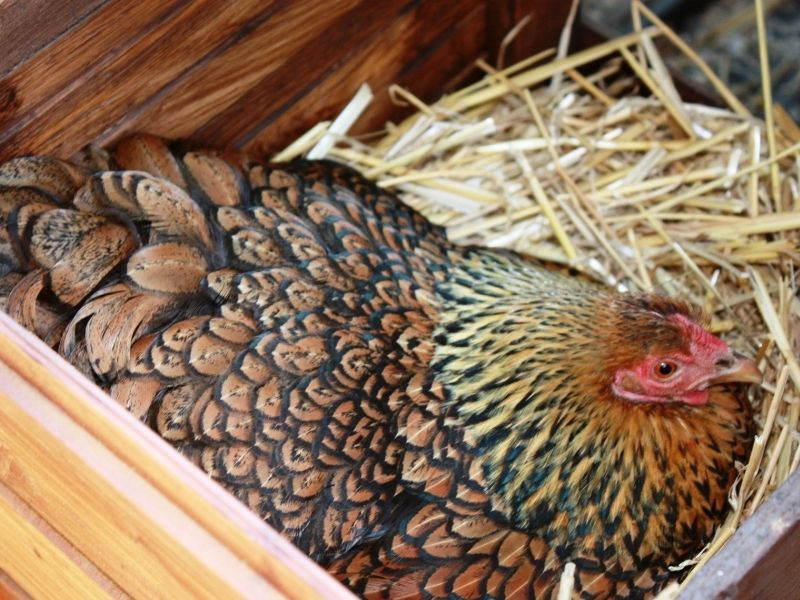
Getting the first farm fresh eggs from your hens is a great feeling especially after all the care you put into growing them. It is almost like finding the treasure after a patient hunt.
You would have spent many weeks and months with your chickens as they grew in your farm or backyard, and now you are excited to gather some fresh chicken eggs.
In most cases, the earliest eggs start arriving when the young pullet turns about 18 weeks of age. This is mostly subject to the nutrition, breed, and environment of the hens.
If you don’t want the eggs to hatch, then there is no need for a rooster for the production of eggs. For the question of, “Can chickens lay eggs without rooster?” The answer is yes!
6 Tell-tale signs to watch for in your backyard flock:
As a backyard chicken farmer, it is important to know when your chickens are ready to start laying eggs. However, identifying the signs when chickens start to lay eggs can be confusing for beginners.
1. Color of Combs and Wattles
One of the first signs that your chicken is going to start laying eggs is an increase in comb size and color. As they get ready to lay their first egg, their combs will become more vibrant and larger in size. Vibrant red or pink combs are typically a sign of good health and readiness to start laying eggs.
2. Increased Appetite
Additionally, you might notice a change in their diet as they need more calcium for healthy egg production. They may begin eating more shell grit or even try One of the most interesting behaviors that chickens exhibit is when they become anxious right before laying an egg. If you have ever owned chickens, you may have noticed them becoming restless and fidgety just before they lay an egg.
eating other sources of calcium like oyster shells or supplements if these aren’t provided by you.
3. Interest in Nest Boxes
Chickens are fascinating creatures that exhibit interesting behavior before laying eggs. One of these behaviors is their increased interest in the nest boxes. You will see that your young pullets will spend more time around the nest boxes, scratching and pecking around. They may also make sounds such as clucking and cooing. This behavior indicates that the chicken is ready to lay an egg and is looking for a suitable place to do so.
It is important for chicken farmers or backyard chicken keepers to provide ample nesting space to ensure their hens have enough room to lay their eggs comfortably. A lack of proper nesting space can lead to stress in chickens, which can result in lower egg production. Plus, hard to find eggs that have been hidden in out of the way places! A lack of proper nesting space can lead to stress in chickens, which can result in lower egg production.
4. Nervous and Restless
Another sign is changes in behavior such as increased agitated and agitation. Chickens often display anxious behaviors when they are about to lay an egg. One of the most interesting behaviors that chickens exhibit is when they become anxious right before laying an egg. As you keep on eye on your young pullets, you may have noticed them becoming restless and fidgety just before they lay an egg.
5. Squatting Position
When a hen is about to lay an egg, she will crouch down on the ground and spread her wings out slightly. She may also lower her head and tail feathers while remaining motionless for several seconds. The submissive squat is not only a sign that an egg is on its way but also serves as a way for hens to communicate with each other. Other hens may recognize this behavior and understand that the laying hen needs privacy and space to complete her task. In addition, roosters will often take advantage of this opportunity to mate with the hen, as it indicates that she is in reproductive mode.
6. Singing the Egg Song
Another interesting traits is the singing of the laying song before they lay their eggs. This is a unique vocalization that signals to other hens in the flock that an egg is about to be laid.
The laying song is characterized by a series of clucks and squawks, which are repeated several times before the hen lays her egg. The song varies from hen to hen, with some hens producing longer and more complex songs than others. Researchers suggest that this variation may be related to individual differences in personality, with more confident hens producing more elaborate songs.
Interestingly, it seems that other chickens in the flock can distinguish between different types of laying songs. In one study, researchers played recordings of different laying songs to hens and found that they responded more strongly to songs produced by familiar birds than those produced by strangers.
Helpful Tips on Keeping Chickens Healthy & Happy: most important factors
Nestboxes
Make sure to have a proper nesting area for your chickens to lay in. Making a definite nesting area with nest boxes is a huge plus to success.
If you do not have a nesting area or nesting boxes set up, your young pullets may sneak away to find a safe and secluded spot to lay their eggs!

At first, your hens might lay eggs irregularly in terms of time, shape, or size.
However, after a couple of weeks, the egg production will become more regular and consistent. The egg size will also increase as the young pullet matures.
The peak of egg-laying for a hen is when it turns around 30 weeks old when they will lay one egg a day.
After that, the number of day per week will begin to slowly decline to approximately one egg every other day to every 3rd or 4th day.
Egg Laying Cycle
Day length is a huge factor is the laying cycle of chickens. A hen needs approximately 14-16 hours of daylight to complete the egg cycle.
If this is of interest to you, here is more information on the light requirement for a chicken’s egg producing cycle which is very helpful for determining how often does a chicken lay eggs.
Late spring, into summer and early fall provide the perfect amount of daylight for hens to be at their peak egg laying.
More light equals more eggs! Of course, that is with all things considered like breed, layer feed, shelter and the months of age of your girls. Find out more about the best coop ideas to raise the happiest and healthiest chickens!
Here is some helpful information on how does a chicken lay eggs?
Day Length
As the days grow shorter from late summer all the way to mid spring of the following year, chickens will typically slow down with their rate of lay.
Some chicken keepers choose to add supplemental lighting to their chicken coops to help maintain a regular laying schedule.
This supplemental light or as some call it artificial lighting is a bit controversial to some as they like to simply allow their flock to follow the natural seasons.
Chickens will typically lay heavily in the months with longer days and then have a natural time of rest during the shorter days of the year.
Supplemental Lighting
The feed-to-egg conversion ratio is what drives the supplemental lighting issue. If you need to make a profit from your flock, then adding extra lighting to your coop makes sense.
We have always added extra lighting to our coops in the shorter day months for a couple of reasons.
First, we wanted our chickens to pay for their feed. Lay mash, scratch grains and oyster shells cost money. Selling our farm fresh eggs really helps to offset our feed costs.
Next, in the colder winter months, encouraging our hens to get up to start peaking and scratching around helped them to start warming up by eating and moving!
Adding supplemental lighting is a personal decision so each chicken keeper will have to weigh out their options.
Adding a Timer to the Coop
On a side note, the electricity costs for a 40 to 60 watt bulb is very reasonable. Adding a small timer is also extremely helpful in adding a couple hours in the morning to get your girls up and going without a huge extra expense.
This timer offers the natural day and night cycle. Some people simply keep a light on in the coop all the time but a small timer actually gives the hens time to sleep which is important during cold winters!
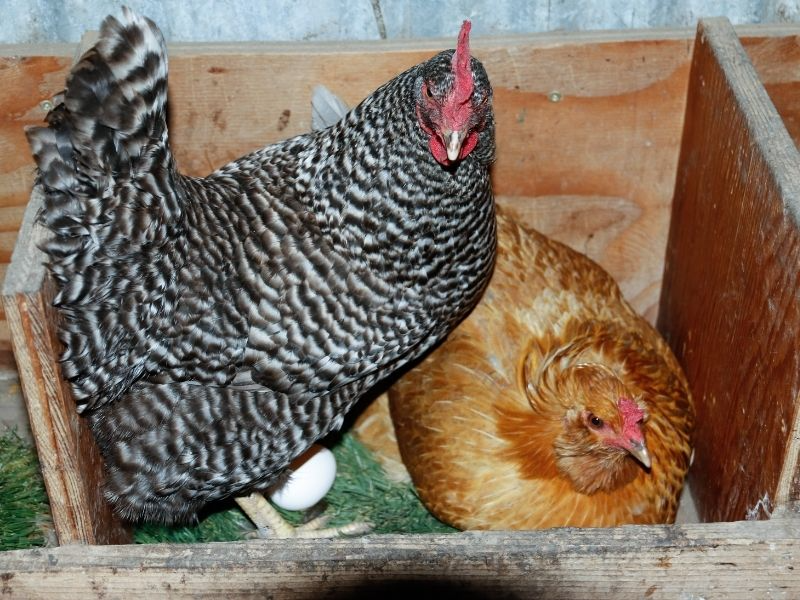
Egg-Laying and Chicken Breeds
One of the most deciding factors in how much sooner or later a hen lays eggs is its breed. This heavily influences when you will start getting eggs.
So, if you are wondering when do barred rock chickens start laying eggs, please note that since Plymouth Barred Rocks are a heritage breed, they will start laying at about 20 weeks of age.
Typically, hybrids or sexlinks will start laying at 16 weeks of age and heritage breeds start at 20+ weeks of age.
In most cases, chicken breeds that have historically been bred for egg production lay eggs much earlier.
These hybrid hens lay their first egg at the age of 16 or 18 weeks. Here’s an great overview of the top egg laying chicken breeds.
Some of the breeds that lay eggs early include:
- Leghorn Chickens: Best Tips for a Dynamic Flock
- Golden Comets
- Sex Links

How to Care for Fresh Eggs:
Here’s a couple more posts on how to take care of fresh egg. Plus, find out how to store eggs and if they are still fresh enough to eat!
How to Wash & Store Fresh Eggs [are you supposed to wash farm fresh eggs?]
SIMPLE EGG FLOAT TEST: How to Check Eggs for Freshness
To Recap When Do Chickens Start Laying Eggs:
To answer the question on how often do chickens lay eggs….it depends. On average, chickens will lay an egg every 26 hours.
However, there are a number of factors that can influence on how often does a chicken lay eggs.
There are many factor to remember; age, breed, health, and seasonality can all play a role in how often a chicken produces an egg.
The main tell tale signs are red combs and wattles, increased appetite, interest in nesting boxes, squatting position, restlessness and singing the egg song!
Chickens usually start laying eggs when they are around 6 months old. Some breeds of chickens may start laying eggs sooner than others.
For example, Rhode Island Reds typically start laying eggs at around 5 months old.
The amount of daylight also has an effect on egg production. Chickens need 14-16 hours of daylight in order to lay eggs. In the winter months, when there is less daylight, chickens will lay fewer eggs.
Generally speaking, healthy chickens will lay more eggs than those that are not in good health.
Final Thoughts on When Do Chickens Lay Eggs
So, to answer our question of when does a chicken start to lay eggs, we now know that the exact time of the first egg depends on several factors. The main factors depend largely on the breed, nutrition, and the environment provided to them.
It is a process of patience, so making sure you take care of your chickens throughout their life will keep you in more eggs for many months and even years!
You May Enjoy find out What Chicken Can Eat!