
How to Grow Onions: Simple & Easy

Onions are versatile root vegetables that are easy to grow and easy to store long-term. A large crop of onions can be grown in a small garden space, making them a worthy vegetable to plant and grow.
Use these growing tips and get to planting some onion seeds or onion set this spring. Learn how to grow green onions and also slicing onions for fresh and for storage.
How to Grow Onions
Find Your Zone: FREE USDA Hardiness Zone Planting Guide
Growing Location
Select a sunny location with well-draining soil. Work in some organic matter such as compost or well-rotted animal manure to increase soil fertility, loosen the soil, and improve drainage. If your garden soil is heavy and tends to remain soggy then grow onions in raised beds, containers, or in soil mounds to improve drainage.
You May Also Enjoy:
- HOW TO FIND THE PERFECT GARDEN SPOT in 6 EASY STEPS
- USDA Growing Zones Map of the USA: Helpful Garden Information
- GARDENING OVERVIEW
- How to Plan & Grow a Sustainable Garden for Beginners
- How to Plan & Create the Best Garden Design that Works for You
Quick Overview
There are 3 main varieties of onions: Short Day, Long Day and Day Neutral.
- Long Day Onions start to develop bulbs when the days reach 14 to 15 hours long. Long Day onions are best in the northern half of the USA in approximately USDA Zones 4, 5 and 6. (Zones 3 will need to start onion seeds or sets indoors to get a jump on the growing season.
- Day Neutral Onions can grow grow best in USDA Zones 5 and 6.
- Short Day Onions start to develop bulbs when the days reach 10 to 12 hours. Short Day onions are best in the southern half of the USA. In approximately USDA Zones 7 & higher.
Day Length and Onion Growth
Important information: onion bulb growth is determined by the day length.
If your onion plants do not get enough time to grow and the plant tops do not have time to fully develop, then your onion bulbs will be small. This applies to all 3 varieties.
If your day length does not reach the needed 15 hours of sunlight then long day onion varieties will not develop a bulb at all.
The variety of onions is very important for proper development of your onion bulbs. So, consider your options when choosing either short day, long day or day neutral onion varieties.
If you are just getting started with growing onions, then your best bet is to go with Day Neutral or Intermediate Varieties of onion seeds or sets. These Intermediate onion varieties perform well in all growing zones from 3 to 10.


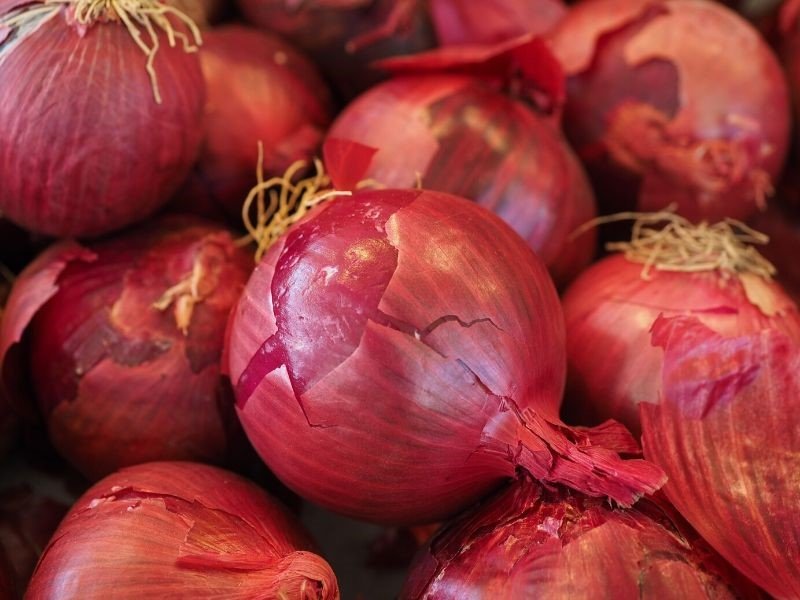
Onion Flavor:
Yellow onions are the most pungent of the colored onions. White onions are more mild in flavor. And, the red or purple onions are the most mild in taste.
If you want to plant day specific onion varieties, take a look at a few different options. Plus, make sure to read the excellent article from Johnny’s Selected Seeds. The link is just below the onion varieties.
Day Neutral or Intermediate Day
Excellent Article on Onion Varieties: Onion Bulb Formation and Day Length by Johnny’s Selected Seeds
Planting Onions
Start onion seeds indoors 6 weeks before the last predicted frost date in your area or you can plant onion sets directly in the garden after all danger of frost has passed. Seeds can also be planted directly into outdoor garden soil when the air temperature has warmed to above 60 degrees for 3 consecutive days in the spring.
Make shallow rows in prepared garden soil 12-inches apart. Sow seeds thickly in the rows and cover with ½ inch of soil. Water in well to set the seeds in the soil. You must be gentle so the seeds won’t be disturbed.
After the seeds sprout, when they are approximately 4 to 6 inches tall, carefully thin seedling out to 1-inch apart for green onions and 4-inches apart for larger onions.
For Seed Starting Ideas, Look Here:
Planting Onion Seedlings or Onion Sets (little bulbs)


Here is a sampling of Mixed Onion Sets
Onion plants or set which are the small looking onion bulbs, plant seedlings/onion sets in the prepared rows 1-inch apart for green onions and 4-inches apart for slicing onions.
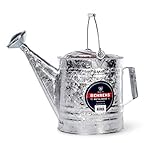
Cover with ½-inch of soil and water in well with a sprinkling type watering can. Take care to not disturb the soil over the bulbs or from around the seedlings. Gentle watering is what is needed. Take a look at this water can.

Care for Young Seedlings
Top dress with a little all-purpose organic fertilizer, working the fertilizer into the top inch of the soil. Add a layer of mulch around the onions and keep the soil moist and prevent weed growth. To encourage more stem growth on green onions, mound 2-inches of loose soil around the green stem to create a small hill once it reaches 4-inches in height.
Do not mound soil around the stem of cooking or slicing onions, it will cause the necks of the bulbs to rot. Onions have shallow roots and plants will need watered frequently during hot, dry weather.


Harvesting Onions

Harvest green onions when the green stems reach about 6-8 in height. Scratch the soil away from the stem base, grasp stem and pull straight up. Leave all other onion varieties in the garden soil until the tops fall over.

To harvest larger onion bulbs, grasp the stem base and pull mature onions straight up and out of the soil. Lay the onions on top of the garden soil for 2 days to dry, then store in a cool, dry place.
Consider Storing Your Onions in Racks!
Related Post on Onion Growing Problems

It’s a Wrap……
So, if you love fresh onions then learning how to grow onion from seeds or from onion sets is snap! You can start small by planting a few onion seedling from you local nursery in you in pots on your balcony, patio or deck! Or, consider planting a lot of onions to last all fall and winter!