Pollination of Zucchini Plants in a Greenhouse

We will discuss the main problem caused by poor pollination of zucchini plants in a greenhouse or indoor garden.
Zucchini Pollination
We will use zucchini plants as an example, but all plants need pollen transfer. You will see pictures of male and female zucchini flowers and healthy zucchini squash.
Learn how to grow zucchini in pots or containers indoors or in a greenhouse.
Greenhouses help extend the growing season, especially in cooler climates. However, they require special attention to plant growth cycles.
Proper pollen transfer is crucial for vegetable gardens and gardening overall.

Pollination is the transfer of pollen from a male part of a plant to a female part of a plant, enabling later fertilization and the production of flowers, fruits & seeds. ~Wikipedia
Related Post: How to Grow Zucchini from Seed
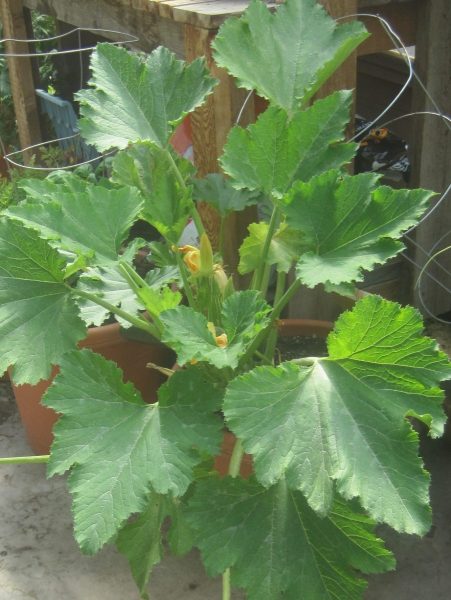
MALE and FEMALE BLOSSOMS :
Zucchini plants have male and female flowers on the same plant. They are part of the Cucurbita family, which is in the gourd family. Other common vegetables in this family include pumpkins, squash, and cucumbers.
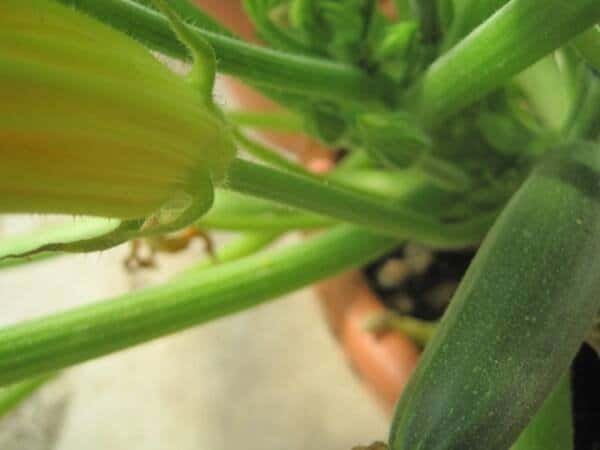
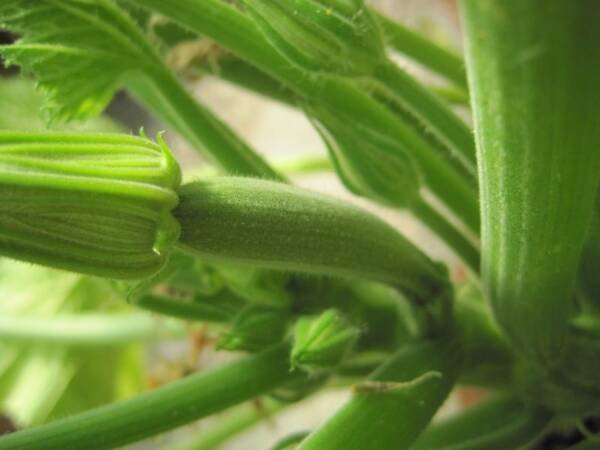
The male blossoms develop on the end of the thin stem while the female blossoms develop on the end of a small zucchini fruit as shown in the photos above.
PROPER FRUIT DEVELOPMENT:
In the photos below, you can see a small, immature zucchini on the left. It did not get enough pollen from insects or air movement in our closed greenhouse, which was cooler.
The zucchini started to grow but became stunted and shriveled at the blossom end because it was not properly pollinated.


The zucchini on the right was hand-pollinated with a small paintbrush. Pollen from a male flower was gently gathered on a small paintbrush and was lightly dusted on the stigma in the female blossom. This is a wonderful pollination activity for kids! It is very hands-on.
Male Anthers
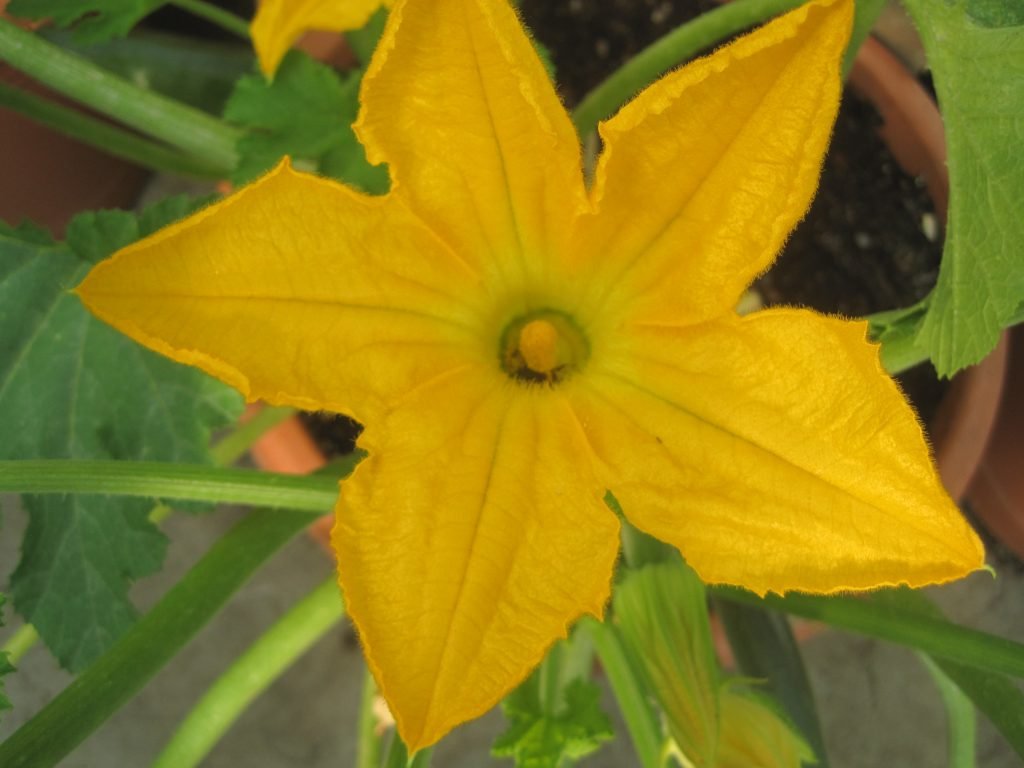
The pollen in the above photo is surrounding the male anther which is the visible projection in the center of this blossom.
Make sure to look further down this post to see close-up photos of a bee in this flower. The stamen, pollen, and details of the blossom are highly visible.
FEMALE STIGMA:


The female blossoms appear at the end of small zucchini fruits. These blossoms have a visible cluster in the center called the female stigma, as shown in the photo below.
POLLINATING IS REALLY FOR THE BEES:
The easiest way to ensure proper pollination is by having a healthy population of bees and insects.
These little creatures move in and around the blossoms with a high probability of transferring pollen from the male anther to the female stigma and thus completing the process.
PHOTOS OF POLLEN COVERED BEE:
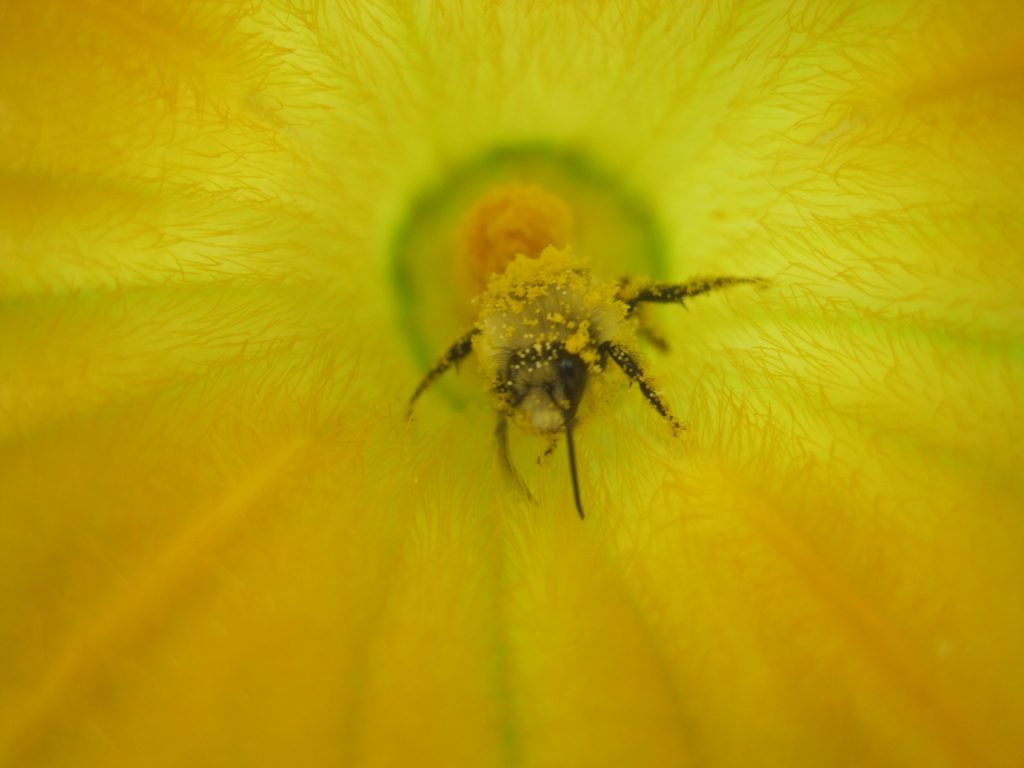
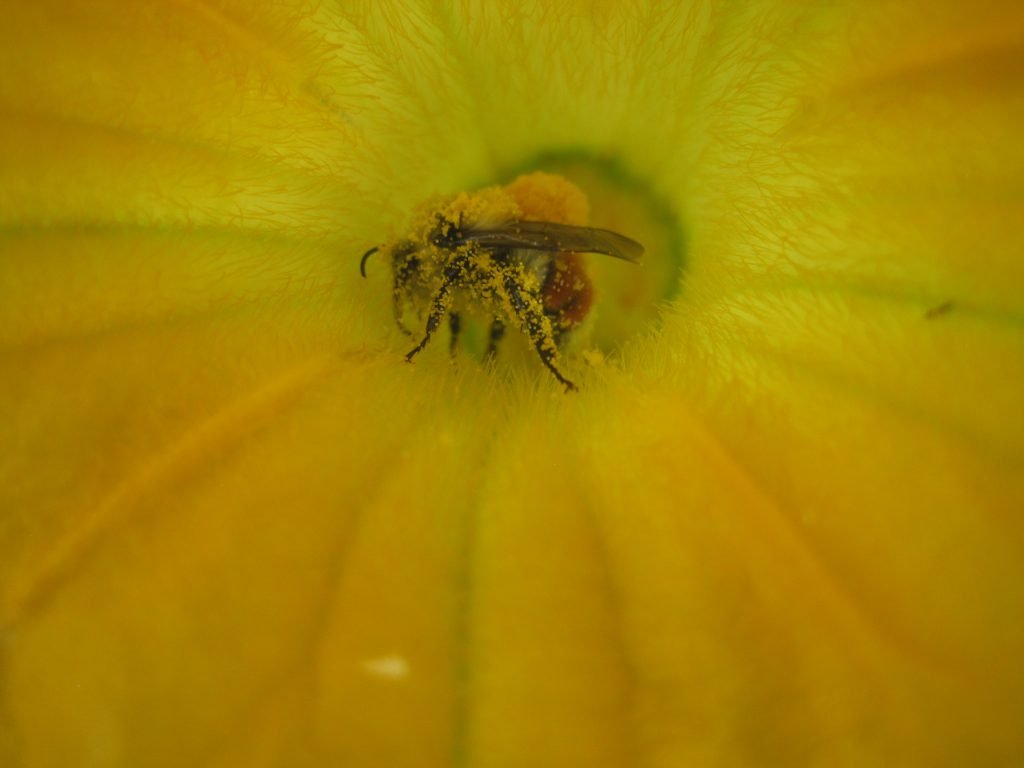
The bee was covered in fresh pollen, almost like she was drunk from it. This female worker bee crawled inside a male zucchini blossom. When she tried to escape, she was so weighed down with pollen that she fell back into the flower.
When she finally got out, she struggled to fly because of the pollen. She managed to take off but flew low and slow. This little bee deserved a reward for her hard work!
POLLINATION IN A GREENHOUSE:
Plants in a protected environment might not get enough bees, insects, wind, or air movement. Without pollen moving from male flowers to female flowers, zucchini fruit may not grow well.
Another issue that can affect pollination is having too few plants nearby, like just one plant in your greenhouse!
WHAT TO DO WITH ONLY ONE ZUCCHINI PLANT:
We only had room for one zucchini plant in our greenhouse as they take up so much space. Zucchini plants typically have a large leaf span; the leaves may be even larger when they are grown in a greenhouse as this is an ideal growing environment.
With only one plant, watch for when you have both the male and female flowers opening at the same time. Zucchini flowers typically open in the morning as the air temperature warms. This is the ideal time to catch both flowers opening together.
SHORT TIME-FRAME TO POLLINATE:
The flowers only stay open for a short period of time. In order to ensure proper pollination, I hand-pollinated the female flowers with a small paintbrush. I gently gather fresh pollen from the male flower anther and dust the female flower stigma.

POLLINATION OF ZUCCHINI PLANT:
I was successful in properly pollinating on my second attempt. Here is the zucchini that has now fully developed and is almost ready to pick!!

If you have several zucchini plants, then allowing some air movement or even tapping the plants to encourage pollen distribution will help ensure adequate pollination for a successful crop.
Consider adding air movement or controlled wind in your greenhouse or indoor garden, along with using bees and hand pollination. If you can’t do that, gently tapping individual plants can help move the air and assist with pollen transfer.
Final Thoughts on Pollination
The key is to ensure good pollination of zucchini and all plants for a healthy harvest. It’s disappointing to work hard planting and growing only to end up with a poor yield.
This is a fun gardening adventure and is perfect for kids to learn the importance of bees, insects, and the future of plants for food!