How to Grow Pumpkins in Your Home Garden
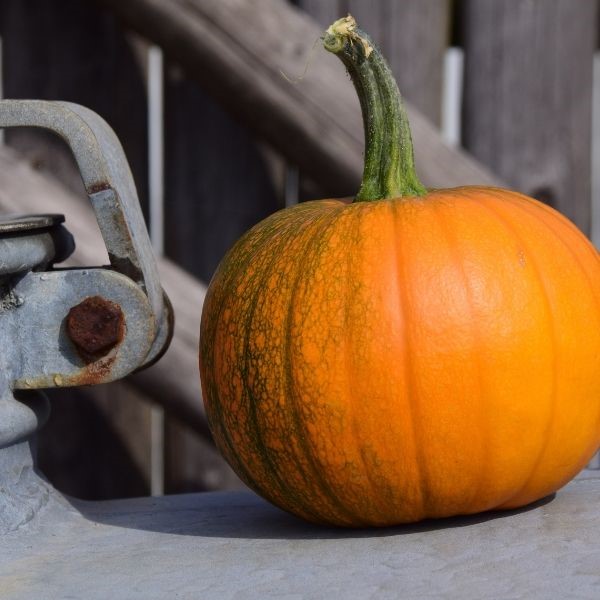
HOMEGROWN PUMPKINS: Pumpkins are a wonderful addition to any garden.
They are fun to grow and are easy to store, plus growing a pumpkin patch can be a cash crop for your home garden; find the best way on how to grow pumpkin plants in your garden!
How to Grow Pumpkins
Growing pumpkin plants is a popular and rewarding experience for many gardeners. Knowing what to look for in a healthy pumpkin plant is the first step in successfully growing them.
In this article, we will explore what pumpkin plants look like and how to grow them. We will discuss their structure, size, leaves, and other identifying characteristics.
After reading this article, you will have a better understanding of how to identify and cultivate healthy pumpkin plants.
Along with making great jack-o’-lanterns and pumpkin pie, pumpkin offers some amazing health benefits: Nutrients in Pumpkins
So, What Do Pumpkin Plants Look Like?
Pumpkin plants belong to the Cucurbitaceae family and have long vines that can grow up to 30 feet. These vines can be trained to grow between other crops, like in the Three Sisters Method.
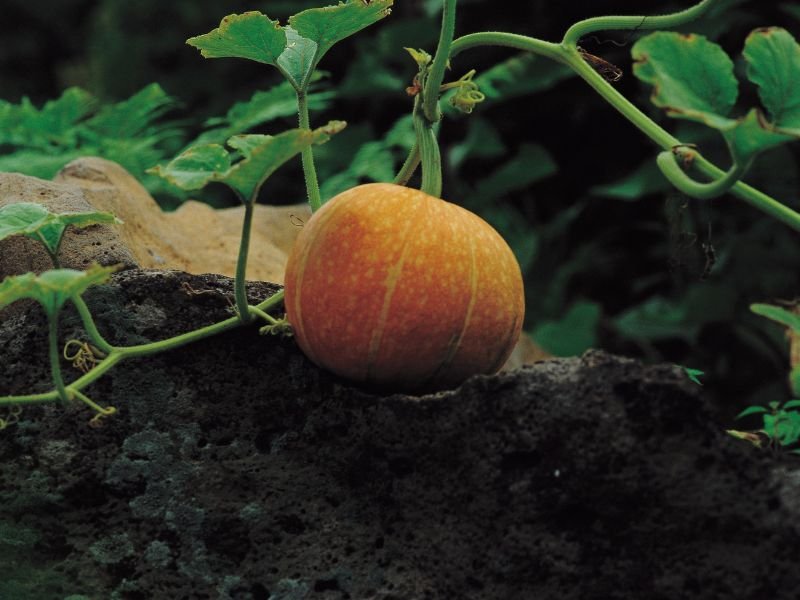
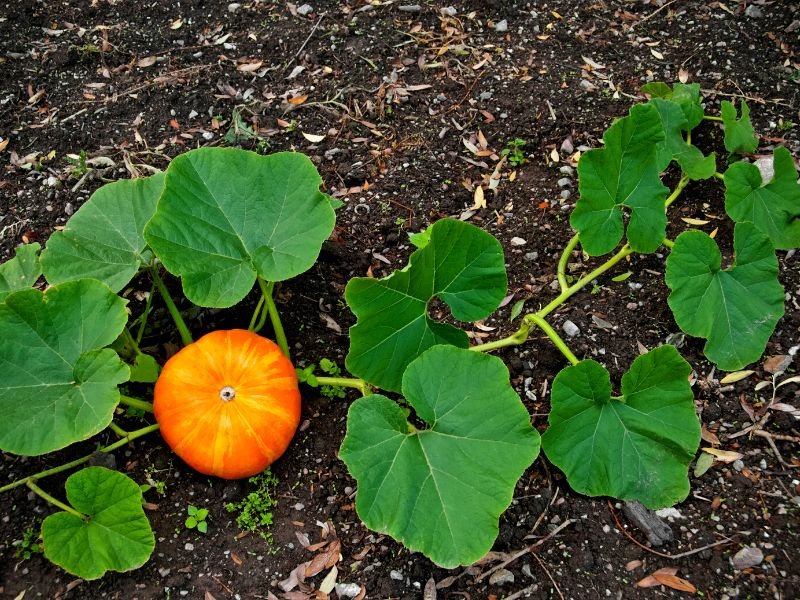
Pumpkin plants have large, palm-shaped leaves divided into five lobes, each with a jagged edge. They produce yellow flowers, with male flowers growing on long stems.
The female pumpkin flowers grow at the base of the plant, not on the long stem.
Small pumpkin fruit starts to form from these female flowers.
Pumpkin plants are annual herbs from the Cucurbitaceae family. They have vine-like growth and bright yellow flowers. As they grow, they develop into small baby pumpkins.
These small pumpkins may only grow slightly for pie pumpkins or continue growing into large pumpkins.
The leaves are light to medium green and can be lobed, reaching up to 12 inches long.
The stem has coarse hairs that feel sharp and scratchy. It is usually ribbed or furrowed, giving the plant a rough texture.
We Will Cover the Following Topics:
- Soils and Growing Conditions
- Sunlight
- Temperature
- Planting instructions
- Cold Hardiness
- Days to Germinate
- Thinning
- Varieties
- Days to Maturity
- Harvesting
- Storage Tips
- Plus, a few Pumpkins Recipes!
- Printable Growing Handout
- Container Gardening
Find Your Zone:
FREE USDA Hardiness Zone Planting Guide
1. SOILS:
- Pumpkins need well-drained soil with a pH between 6.5 and 7.0 (adjust your soil pH with wood ash or garden limestone).
- Moist soil but not waterlogged.
- Garden beds, containers, or pots all work well.
- Just make sure to have at least 16 inches of soil in your containers.
- Apply organic all-purpose fertilizer.
- Pumpkin plants need approximately one inch of water a week, with deep watering being the preferred method.
Soils differ greatly based on where you live, so they need different amendments.
You can easily test your soil with a cheap soil tester from Amazon.
Pumpkin plants thrive in warm weather, so the soil should be around 65 degrees. They also need a long growing season.
If you live in the northern states with a short growing season, you can still grow pumpkins.
Although pumpkins dislike cold weather, you can start seeds in a greenhouse or hothouse and use season extenders to help them grow!
Just remember to leave enough space for the pumpkin vines to spread.
2. SUNLIGHT:
Pumpkins need full sun but can handle some shade. They require 6 to 8 hours of sunlight each day for healthy growth.
3. TEMPERATURE:
Pumpkins and squash thrive in warm temperatures. Their leaves are sensitive to frost, so it’s crucial to protect them from cold weather.
- Pumpkins and squash thrive in warm temperatures. Their leaves are sensitive to frost, so it’s crucial to protect them from cold weather.
4. PLANTING:
Plant pumpkins when the soil temperature reaches at least 65 degrees. I start pumpkin seeds in my greenhouse and then move them outside when it gets warmer.
Don’t let the seedlings grow too big before transplanting, as their roots can get damaged. Transplant them after 3 to 4 weeks.
Note: Pumpkins spread out 8 to 20 feet in the garden. Make sure to leave enough space between plants and rows.
Specifics on Direct Seeding:
- Plant seeds in single rows.
- Soil temperature should be between 65 degrees and 85 degrees.
- Seeds should be planted 12″ apart in rows.
- Plant 2 to 3 seeds in each spot (these will be thinned to the 1 to 2 strongest seedlings).
- Rows should be approximately 6 feet apart for bush and small-fruited pumpkins. 12 feet for large pumpkins
- Cover seeds with 1/2″ to 1″ of dirt and tap firmly.
- Keep seeds damp while germinating but not saturated.
- Seeds will rot if they are too cold and too wet.
- Hand weed or mulch to suppress weeds.
- Protect from frost danger.
- Protect from frost danger with cloches, Wall O’ Waters, or row covers.
The best time to direct seed for most growing zones is past their last frost date in either late May or early June. Just make sure to double-check with your local growing zone.
Specifics on Starting Pumpkins Seeds for Transplants:
- Plant 2 to 3 seeds in small pots.
- Cover with 1″ of soil.
- Keep seeds damp while germinating.
- Thin seedlings to 1–2 of the strongest young plants by snipping with scissors to not disturb the roots.
- Transplant seedlings at 3 to 4 weeks of age.
- Set out pumpkin seedlings approximately 18″ apart for bush varieties and 2′ to 3′ for larger-sized pumpkins.
- Take great care not to disturb the roots.
- Get soil moist but not saturated, as seeds can rot if cold and too wet.
- Hand weed or use mulch to suppress weeds.
- Protect from frost danger with cloches, Wall O’Waters, or row covers.
- Watch for powdery mildew when starting or growing pumpkins in a greenhouse environment—good air circulation is helpful in preventing this fungus.
- These French watering cans are especially useful.
♦Please Note: add this information to your Garden Journal.
5. COLD HARDINESS:
Sow pumpkin seeds in warm soil. Be careful of long periods of cold and wet weather, as this can cause the seeds to rot and not sprout.
Pumpkins have large leaves that can easily get damaged by frost. Protect the plants if frost is expected.
Pumpkins do not like cold or wet conditions, so plant them when the soil is warm. You can also start them indoors or in a small greenhouse. Wall O’ Waters are super for a season extender and are a very good idea to protect your pumpkin plants.
6. DAYS to GERMINATE:
Pumpkin seeds usually sprout in about 7 to 9 days. They grow faster in warm soil.
7. THINNING:
- Choose the 1 or 2 healthiest pumpkin seedlings in each spot.
- If planting in rows, space the healthiest seedlings 18 inches apart.
- For large-fruited varieties, keep them 2 to 3 feet apart.
- In containers, keep two seedlings per container.
8. VARIETIES:
1. Champion Pumpkins 90 Days
2. Connecticut Fields Pumpkin 110 Days
9. DAY to MATURITY:
You can pick pumpkins when they have a full color and are mature. They usually take between 85 and 120 days to grow.
If you want to harvest pumpkins in the fall, count backward from your target harvest date and add 2 weeks for the seeds to germinate. Then plant your seeds based on that date.
10. HOW to HARVEST:
11. STORAGE IDEAS: for Pumpkins
- Keep pumpkins in a cool, dark place like a root cellar or a cold room in your basement.
- Read this before you try to can pumpkin puree at home: DO NOT HOME CAN PUMPKIN PUREE.
- Make sure to reference your Ball Canning and Freezing Resource Book.
- You can safely process pumpkin cubes at home using a pressure canner, but you should not puree them because the mixture is too thick for home canning.
- Freezing pumpkin is a snap!
To Make Pumpkin Puree:
- Cut your pumpkin top off.
- Scoop out all seeds and membrane.
- Cut the pumpkin into smaller pieces that will fit in your large kettle.
- Gently boil pumpkin pieces until tender.
- Once the pieces are tender, drain and cool.
- Scoop soft pumpkin flesh away from the skin.
- Place the pumpkin flesh in a strainer to drain further.
- When drained, process pumpkin in a food processor or simply mash.
- Fill plastic quart-size freezer bags, seal, and
- Lay the bag in a single layer, flat on a cookie sheet.
- Place the cookie sheet in the freezer.
- Once frozen, store pumpkin puree until needed.
- For freezing in jars, leave at least one inch of headspace in each jar.
- Place jars in the freezer without lids to allow for expansion.
- Once frozen, add lids and store in the freezer until needed.
- Make sure to order your Ball Canning and Freezing Resource Book.
12. RECIPE IDEAS for Pumpkin:
- Collection of Best Pumpkin Recipes
- All Oil Pie Crust for Pumpkin Pie
- Best Ever Pumpkin Muffins
- The Perfect Pumpkin Pie Recipe
13. PRINTABLE INSTRUCTIONS:
HOW to GROW PUMPKINS | How to Grow Series
How to Grow Pumpkins
Materials
- Pumpkin Seeds
- Garden Soil
Tools
- Rake
- Shovel
- Trowel
- Watering Can
Instructions
Specifics on Direct Seeding:
- Plant seeds in single rows
- Seeds should be planted 12" apart in rows
- Plant 2 to 3 seeds in each spot (these will be thinned to the 1 to 2 strongest seedlings)
- Rows should be approximately 6 feet apart for bush and small fruited pumpkins. 12 feet for large pumpkins
- Cover seeds with 1/2" to 1" of dirt and tap firm
- Keep seeds damp while germinating but not saturated
- Seeds will rot if they are too cold and too wet
- Hand Weed or Mulch to suppress weeds
- Protect from frost danger
- Protect from frost danger with cloches, Wall O' Waters or row covers
Starting Pumpkins Seeds:
- Specifics on Starting Pumpkins Seeds for Transplants:
- Plant 2 to 3 seeds in small pots
- Cover with 1" of soil
- Keep seeds damp while germinating
- Thin seedlings to 1 - 2 strongest plants by snipping with scissors to not disturb the roots
- Transplant seedlings at 3 to 4 weeks of age
- Set out pumpkin seedlings approximately 18" apart for bush varieties and 2' to 3' for larger sized pumpkins
- Take great care not to disturb the roots
- Keep soil moist but not saturated as seeds can rot if cold and too wet
- Hand Weed or use Mulch to suppress weeds
- Protect from frost danger with cloches, Wall O' Waters or row covers
14. CONTAINER GARDENING:
You can grow pumpkin plants in a big pot or container. Make sure there is enough space for them to spread out since they are vines. I have had good luck starting my pumpkins early by planting them in my small greenhouse.
If you live in the lower USDA zones, giving your plants extra protection can help you have a better pumpkin harvest.
Make sure to read about proper pollination in a greenhouse environment. This post explains how to hand-pollinate zucchini plants growing in a greenhouse.
Top Takeaways and Helpful Tips:
- Make sure to read the back of your seed packet for specific planting instructions for each variety of pumpkins.
- Pumpkins need a lot of space to spread out, so consider the type of pumpkin variety you will have room for. Learning about the various pumpkin varieties will be helpful when making your decision.
- Pumpkins can be grown in raised beds if you have room for the vines to trail over the edge and grow along your porch, deck, or balcony.
- Oddly enough, miniature pumpkins can take just as long to grow as giant pumpkins!
- Protect your pumpkins and pumpkin plants, as deer will eat pumpkins!
- Chickens love pumpkins, too!
COMPANION PLANTING: Pumpkins and Squash love Corn, Melons and Zucchini!
You May Also Enjoy:
- How to Pick the Best Garden Spot
- USDA Growing Zones Map of the USA: Helpful Garden Information
- Planting a Bee Garden for a Healthy Harvest
- Ultimate Guide to Heirloom Seeds & Why You Should Plant Them
- Keep a Garden Journal ~ How & Why to Start
- HOW to GROW ZUCCHINI | How to Grow Series
Pin It for Later: