
Electric Water Pump | Irrigating Garden or Lawn

An electric water pump is a handy way to water your garden or lawn! Having adequate water and a viable watering system is vital, especially if you live in a dry or arid location. Consider using a small irrigation pump to water your garden area or yard.

Electric Water Pump
Here are some top tips on how we pumped water from a pond torun sprinklers to water our garden and lawn.
This is an example of our setup. We are not saying you should do the same, as your situation will be different.
First of all, make sure you research the proper pump size for your project. Double-check the distance from the water source to the sprinkler heads and the variation in elevation. You will need the proper pipe size for the volume and pressure of water pumped.
This is why having a plumber design your system might be helpful or having the irrigation expert at your local ranch store design the system.
Always check with your plumber and electrician to set your system up correctly.
We continued to use this small electric pump year after year for garden irrigation and to water the lawn. It has been the best water pump, as it is easy to set up and works well with our hoses and sprinkler heads. We have not hooked up our pump to a lawn sprinkler system or an automatic sprinkler system.
This irrigation pump was set up by the pond each spring and then drained and stored in our garage each fall/winter.
#1 Determine Locations
Water Source: Pumping Water from Pond to Garden
We have a small pond on our property, but you can use any water source like streams, rivers, irrigation ditches, or lakes.
Place your pump close to the water source. This way, it can easily draw water through the uptake siphon and send it to your sprinkler or irrigation system. Make sure the water source has enough water for consistent pressure and flow.
Pumping from long distances puts extra strain on the pump. Try to keep the distance from the water source to the pump under 20 feet if you can.
Location of Pump: when pumping from pond or lake
Place your pump on flat ground near the lake for easy access. Ensure there is enough water so the pump doesn’t run dry.
Our pump can draw water from 25 feet away but cannot pull it up from that distance. The water source is about 5 feet below the pump, so it has to lift the water a little.
Related Post on: How to Locate the Best Garden Spot
Location of Power Source:
Make sure to have your power source close by, but note that our electrical outlet is approximately 125 feet away, which is why we use a heavy gauge wire.
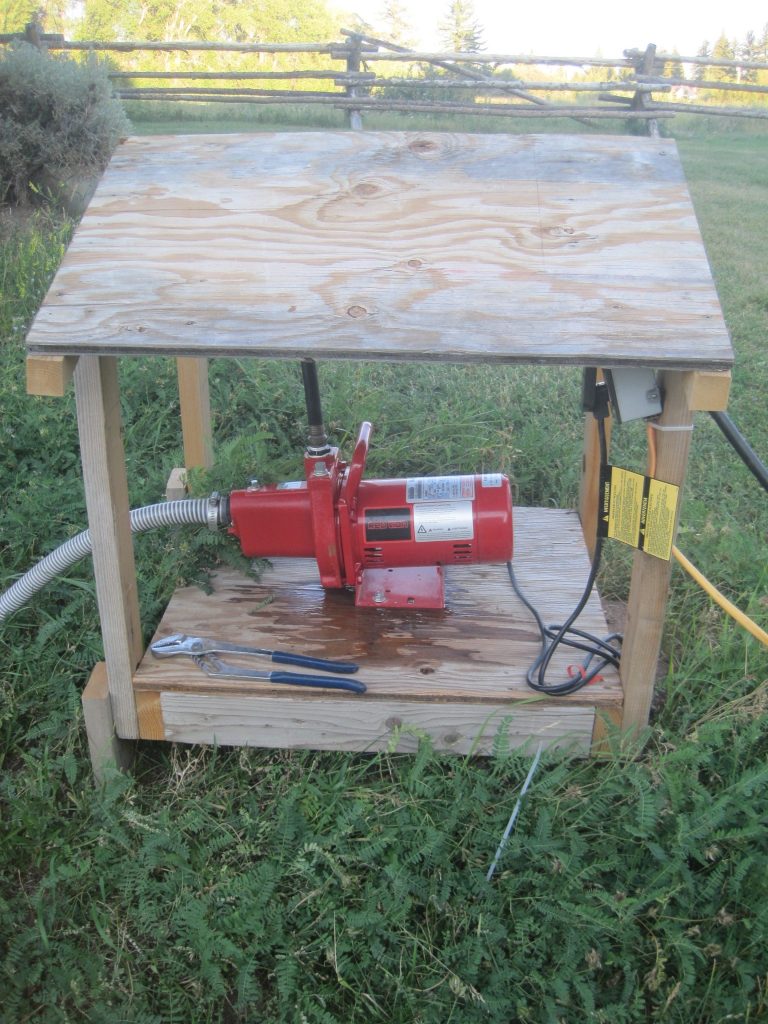
#2 Garden Watering Pump
Type of Electric Water Pump:
ou will need to determine the best option for your particular application.
We had originally bought a gas-powered water pump but have since replaced it with a small electric water pump.
The gas-powered pump was okay, but we found that the gas tank was too small and needed to be refilled often. Plus, the oil needed to be changed frequently, almost daily… and it was very noisy!
It is very important to purchase the correct type of pump for your location and for the job at hand. Take some time to review electric vs gas powered pumps to determine the right pump for your situation.
Make sure to review the gas tank size, air filter requirements, daily oil changes, and the noise level for all gas water pumps that you are looking at.
If you do decide to go with a gas pump, make sure to carefully read the maintenance instructions for these small gas-powered pumps.
Because of the abovementioned negatives with our small gas pump, we decided to replace the gas model with a small electric pump and never looked back. Interestingly enough, our electric pump was 1/2 the cost of the gas pump!
We purchased our pump from a farm and ranch store ~ if you are looking at new pumps, take a look at these Red Lion Lawn and Irrigation type pumps.
In addition, look at a tool supply company or even a feed store. The people at the farm and ranch stores are super helpful in determining what you will need for your system.
Our pump cost approximately $200 plus $100 for all the attachments. Your situation may be different depending on your area. But this particular pump was the best value that we could find locally.
The total cost is likely higher now, but our cast iron pump lasted for many years and needed very little maintenance.
The model we bought is a Red Lion Electric Sprinkler Pump. This pump can be plugged into any normal outlet. Double-check with our electrician on the model and style that is best suited for your situation.
Also, take a look at and do some research on other similar type pumps. Make sure to check with either a plumber or irrigation expert at your farm and ranch store.

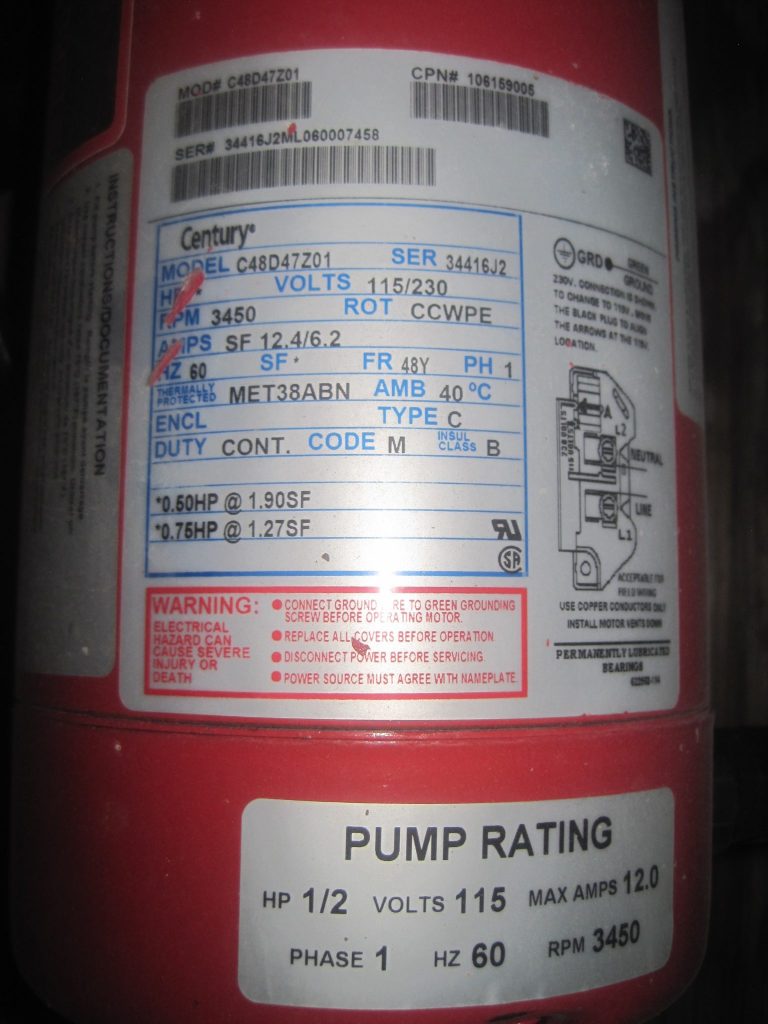

Wiring or Extension Cord from Power Source or Outlet:
We used a heavy wire with a 3-way ground plug-in on one end and an outlet box on the other end. We made this DIY heavy gauge wire that is rated for outdoor use.
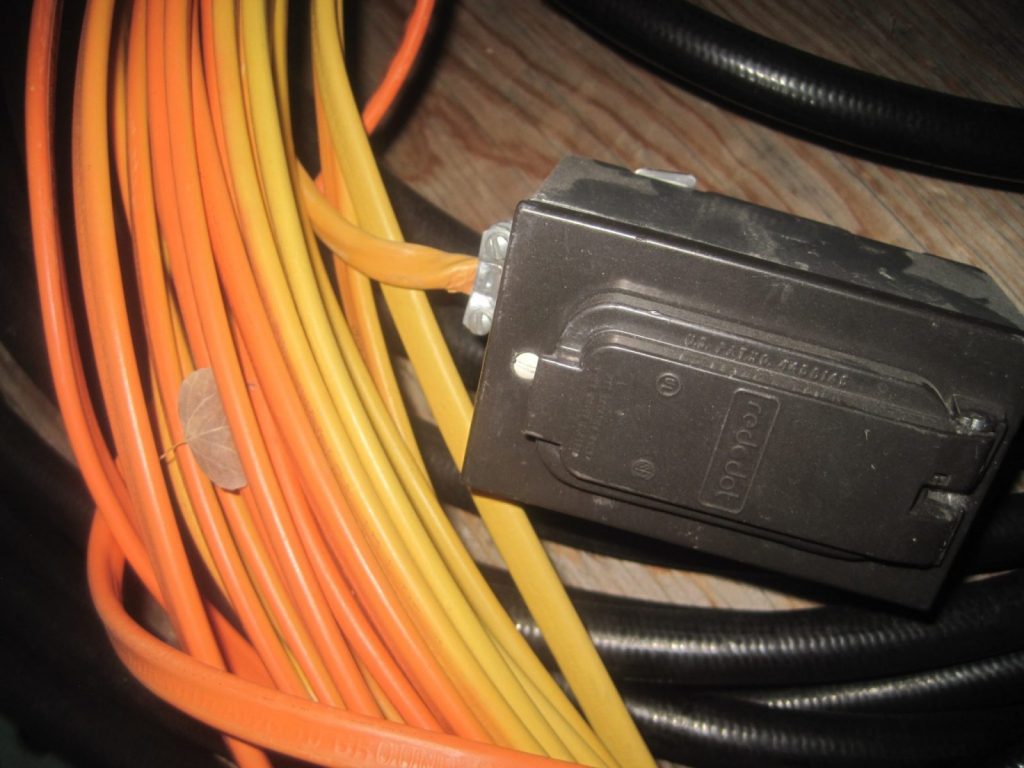
A long heavy gauge extension cord will also work. Just be careful if you are mowing or weed-eating around or over the top of it. Make sure to review the proper gauge of wire for the pump amps.
Wire Garden Staples worked well for us in securing the electrical wire or extension cord into the ground so no one trips over it or cuts it when mowing the grass.
We added a receptacle to the end of the wire and attached this to the wooden shed. The pump can be plugged in and unplugged right at the site instead of having to go back to the power source.
Most importantly, this is tremendously handy should you need to unplug the pump for any repairs or blockages.
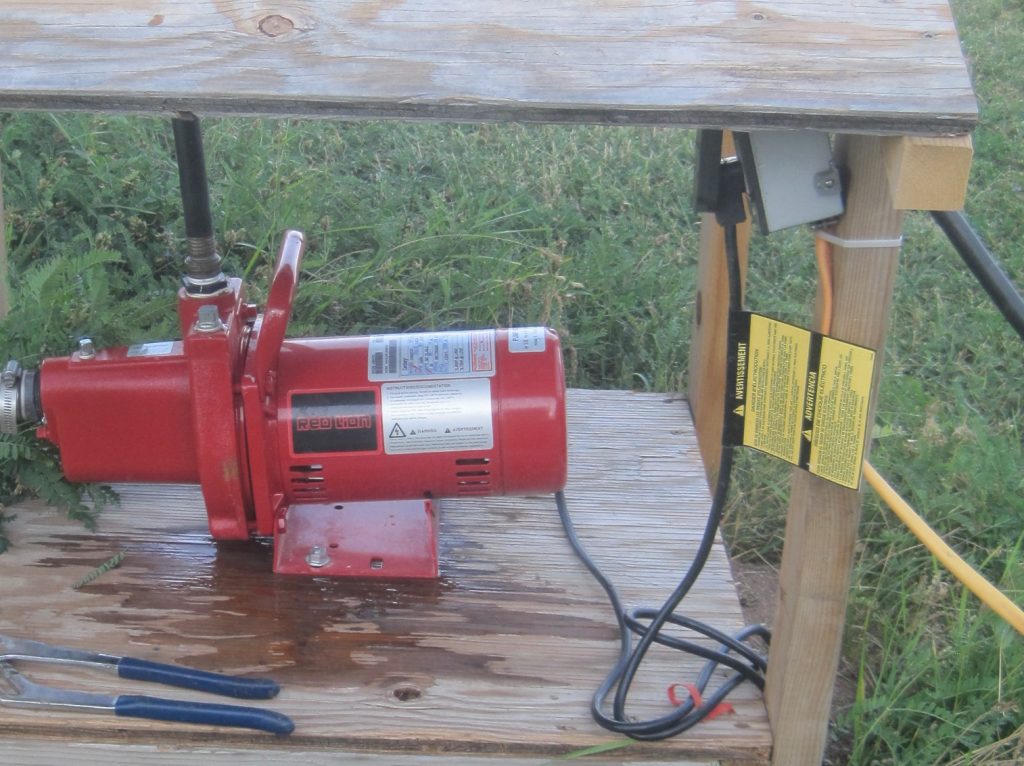
If you look closely, you can see the heavy gauge wire with the receptacle attached to the pump house.
The pump electric cord is simply plugged into the receptacle. This is such a tremendous time saver if the pump needs to be unplugged for any reason.
You can also see the square thumb nut on the upper left by the outlet hose, this is where the pump in primed by filling with water.
You will prime your pump and then turn it on. It should begin immediately drawing water.
#3 Accessories for Ditch or Irrigation Pump for Pond
Attachments and Valves for Pump:
There are several attachments that are necessary for your pump. The following should be available at your local Hardware Store.
- The UPTAKE HOSE is a heavy gauge 2-inch flexible hose which is placed into your water source.
- The FOOT VALVE with SCREEN on HOSE END-this protects the pump by screening out sticks, twigs, rocks, algae clumps, debris, etc. Having a way to filter out debris is the best way to help your pump have a long life.
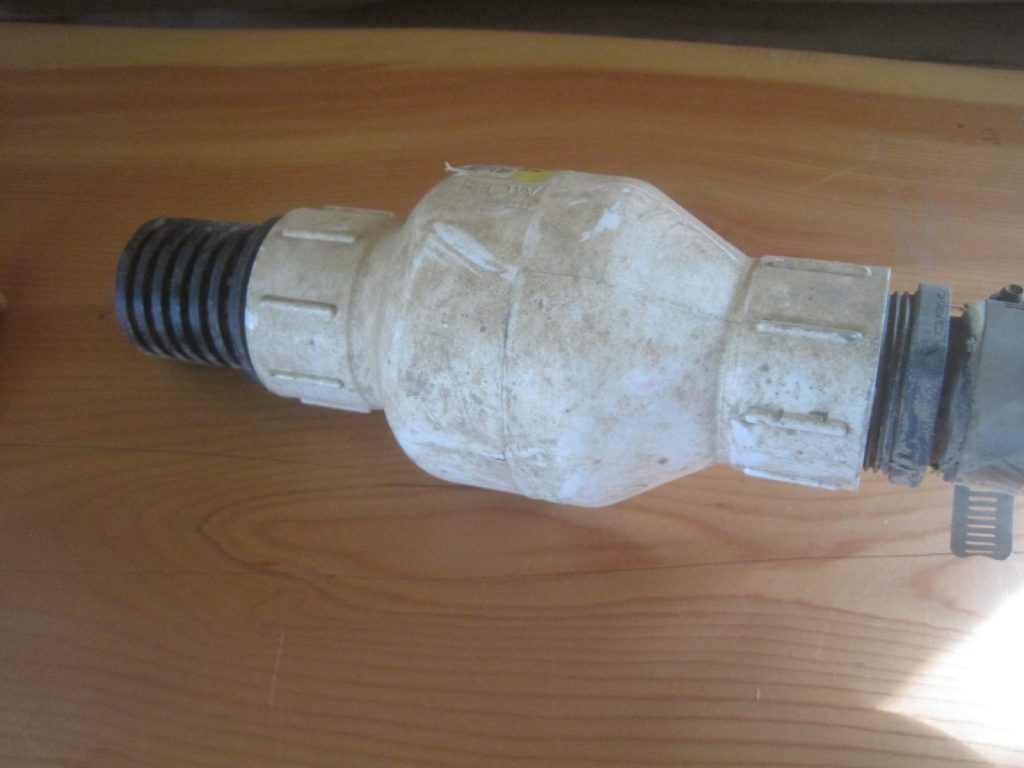
- CLAMPS to attach the hose to the intake port on pump NOTE: quick release attachments are super helpful
- A Short Extension Hose (ours is black, but this is a good one ) which attaches directly to the pump and then to your hoses leading to the sprinklers

Y-attachment for a Pump to Water Garden:
We added a 2-Way Y-shutoff valve attachment (you can purchase a plastic model or a longer lasting brass valve) on the end of the 6 foot hose coming from the pump outlet. We then attached 2 garden hoses to this Y-shutoff valve.
Depending on the length of your hoses, you will need to determine if you can run 1 or 2 sprinklers at a time.
We were going quite a distance so normally only run a single Rainbird Brass Impact Sprinkler at a time.
Therefore, depending on your location, you will need to determine the type of sprinklers that you will need:
Gardena Classic Impulse Sprinkler on Weighted Sled Base
RELATED POST: Mulching Your Vegetable Garden to Retain Moisture
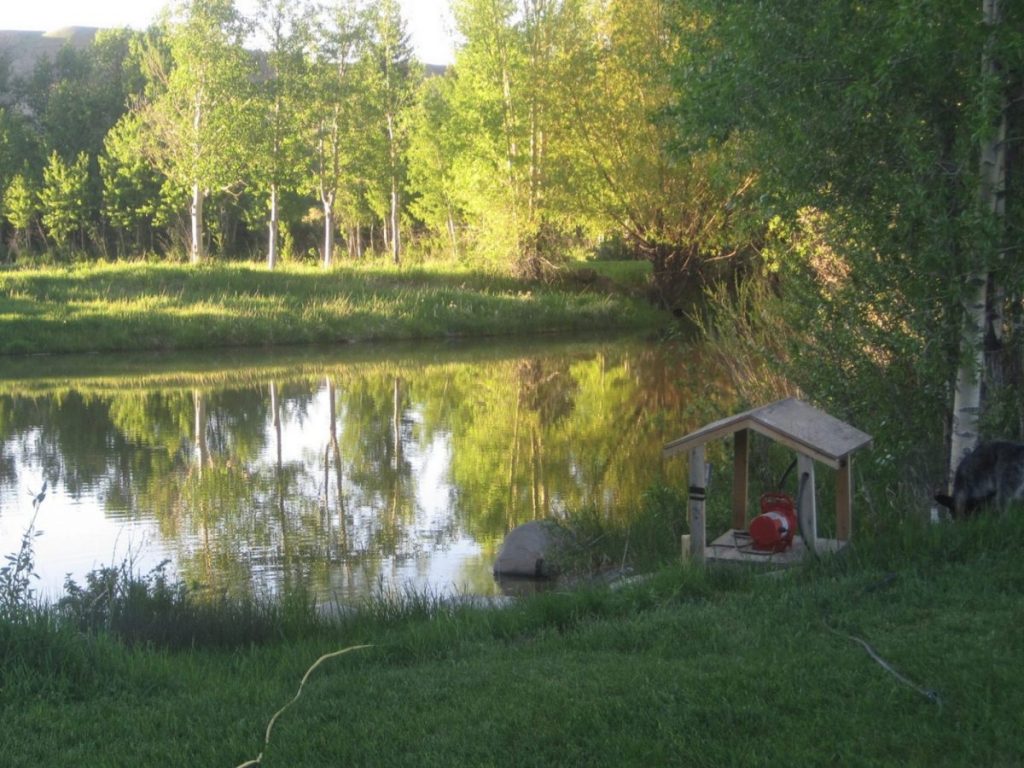
Photos of our set-up:


#4 Protection for Pump
Wooden Shelter to Protect Pump:
We built a small wooden shelter for our pump to protect it from the direct sunshine. This works very well as the pump is bolted to the floor of the shelter.
Therefore, this protects your pump from falling objects as well as from the sun.
Likewise, we can now load the pump and shelter into either a wagon, garden cart or wheelbarrow to easily move it to and from the location.
In Conclusion:
This Red Lion Electric Pump has worked out just great for us. It is simple to set up, simple to move around and simply to store. If you take proper care of your pump, you should get years of reliable service out of it.
This is the perfect set up for our irrigation and watering needs and might work well for your needs.
RELATED GARDENING POSTS that you may find of interest:
- ⇒Growing Lettuces and Greens
- ⇒How to Store Carrots in Peat Moss for Winter
- ⇒Beginning Homesteading Skills You Should Know
- ⇒Vegetable Garden Crop Rotation Guide

Please feel free to send any questions or comments.
Disclaimer: This information is for educational purposes only. You must determine your own needs and seek the qualified experts to set up your system for you.




You made a good point that water pumps should be near the water source as much as possible. I might need to relocate mine after getting water pump repair services soon. That might ultimately help in increasing the water pressure on my hose without needing more electricity to power the pump.