
Vegetable Garden Crop Rotation | An Easy Garden Guide
Plants need good soil, nutrients, water, and sunlight. Nature gives us sunlight and rain. We add extra water when needed. But what about the soil?
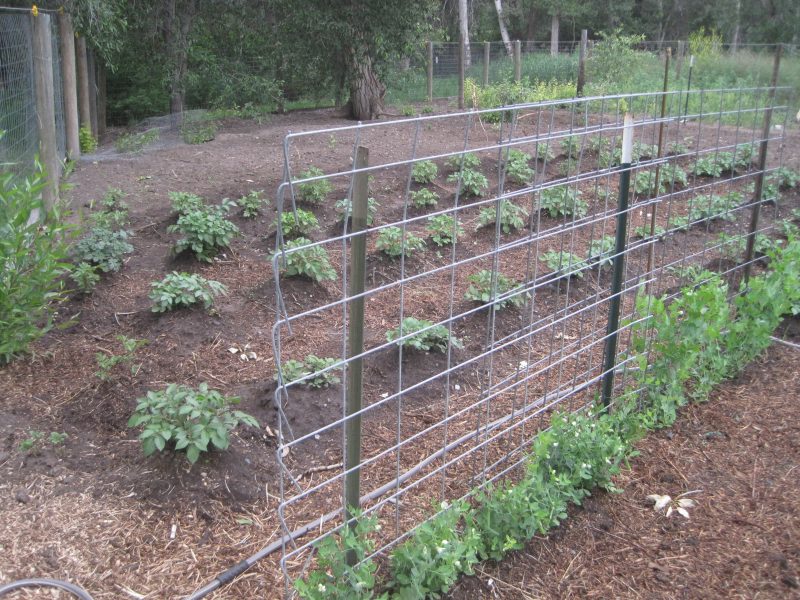
This crop rotation guide shows how to change the order of your vegetable plants to improve the soil.
Crop rotation means planting vegetables in a specific order. Start with high-feeding plants, then follow with nutrient-giving plants, and finish with low-feeding plants.
“The three-field system is a regime of crop rotation that was used in medieval and early-modern Europe. Crop rotation is the practice of growing a series of different types of crops in the same area in sequential seasons.”
Crop rotation – Wikipedia
Vegetable Garden Crop Rotation
This system allows the plants to build organic nutrients in your garden soil with rotation crops.
Plus, rotating crops helps to naturally stop the pests and diseases by planting different plants in different locations instead of planting the same plants in the same location year after year.
For further reading on all things gardening, make sure to getThe Vegetable Gardener’s Bible, as it is an extremely handy guide.
Consider starting a compost pile for beginners and then making easy DIY compost tea.
Depending on your geographic location, soils vary tremendously and need different soil amendments.
Try this easy DIY method to find out how to test the pH of your soil. Or, you can use this inexpensive soil tester from Amazon.
Important Terms Before We Start:
- Givers: These are plants that actually add something back into the soil. These are usually legumes. Legumes add nitrogen back into the soil as they are “nitrogen binding.” They grab nitrogen from the air and put it into the soil! Cool, huh? Read more here on plants that give back to the soil.
- Low Feeders: These are plants that do not demand high nutrient content to survive. They are easier on your garden soil as they require less than the high feeders that are listed below.
- High Feeders: These are plants that take many nutrients from the soil. These types of plants will diminish your soil if you plant them in the same spot year after year. This is why crop rotation is necessary and a very good thing.
Quick Overview of Crop Rotation:
Plants need different minerals and nutrients to grow. Some plants need a lot, some need just a little, and some help the soil.
Examples of Natural Soil Amendments.
- peat moss for alkaline soils
- compost for nutrient-depleted soils
- blood meal for added nitrogen
- green sand improves the soil structure
Crop Rotation:
This simple method reminds you to change the plants in your garden each year.
Plan your planting schedule with this rotation cycle in mind. This is such a great way for beginning gardeners to start when planning their garden design.
High feeders take nutrients from the soil, while givers add nitrogen back into it.
Crop rotation helps prevent plant diseases by breaking the disease cycle for different crops.
Even with crop rotation, monitor your plants to ensure they remain healthy.
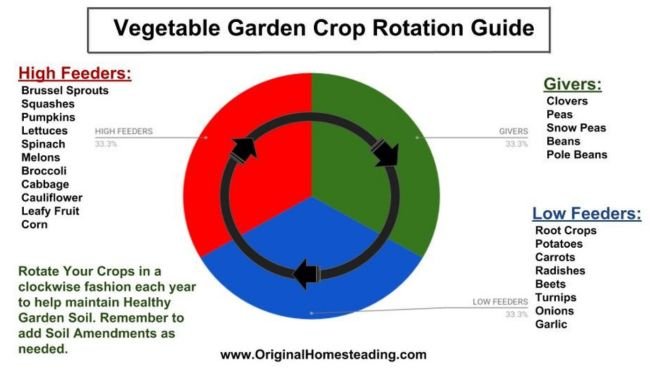
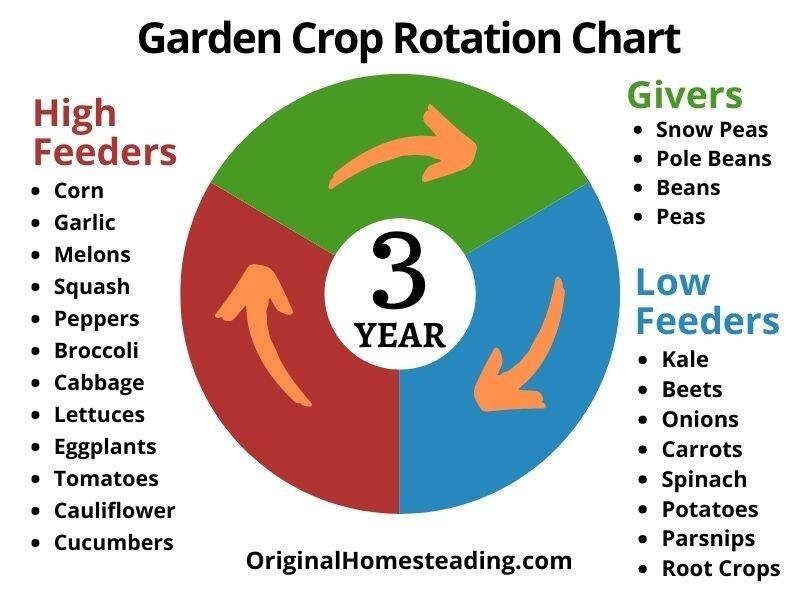
3-Year Rotation Cycle: What are crop rotations?
⇒High Feeders ⇒ Givers ⇒ Low Feeders and back to High Feeders
As stated above, simply rotating your crops on an annual basis is also helpful in keeping down plant disease by stopping the disease cycle for individual crops types.
Even though crop rotation is helpful, keep a watchful eye on your plants to make sure they stay healthy.
3-Year Rotation Cycle: what are crop rotations
High Feeders ⇒ Givers ⇒ Low Feeders ⇒ High Feeders
High Feeders include:
- Brussel Sprouts
- Squash
- Pumpkins
- Lettuces
- Spinach
- Melons
- Broccoli
- Cauliflower
- Cabbage
- Tomatoes
- Cucumbers
- Eggplant
- Corn
- Garlic
Givers include:
- Clovers
- Peas
- Snow Peas
- Beans
- Pole Beans
Moderate to Low Feeders include:
- Root Crops
- Potatoes
- Onions
- Parsnips
- Collard Greens
- Swiss Chard
- Carrots
- Most Herbs
- Beets
- Kale
Back to High Feeders, and the cycle starts again.
Fallow Bed:
If you have enough space, split your garden into four beds. Let one bed rest for a season or plant a cover crop, also known as “green manure.”
“Green manure” is a quick-growing crop that you turn into the soil to enrich it.
GOOD COVER CROPS or GREEN MANURES ARE:
Green manures are plants that you grow and then turn into the soil before they fully mature. They help add important nutrients back to the soil.
You should decide the best time to plant and turn under your green manure based on your local conditions and location.
Green manure
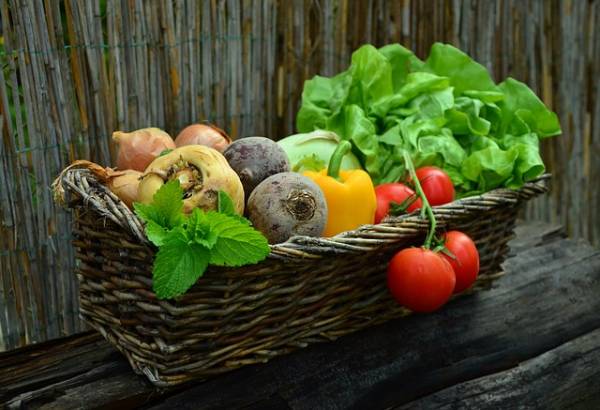
Soil Amendments:
Organic matter helps create healthy, loamy soil.
This organic matter provides a great environment for your garden vegetables.
A compost pile is an easy way to make free, rich organic matter that improves soil quality.
Mulch is also a great option for building complex, living soil. Take a look at how to create rich garden soil by mulching.
Final Thoughts on Vegetable Garden Crop Rotation
In conclusion, rotating your crops is a beneficial practice that can lead to healthier and more productive vegetable gardens.
By strategically alternating high-feeding and low-feeding plants, you can prevent the depletion of soil nutrients and reduce the risk of pest and disease buildup.
This method also helps maintain a balanced ecosystem within the garden, promoting overall plant health and vitality. Make sure to read about blossom end rot to stay ahead of this disease that is so prevalent in tomato plants.
With careful planning and attention to crop rotation principles, you can optimize your garden’s productivity while minimizing the need for chemical fertilizers and pesticides.
Consider implementing crop rotation in your garden to reap its long-term benefits for both the environment and your harvest yields.
Related Post:




My float garden is so small it is hard to get a crop rotation going. I augment my soil each year to compensate. The downside is that crop specific pests are harder to control. – Margy
Margy, thank you for your comment. I find the idea of a float garden to be fascinating. I appreciate you sharing this; I actually had to look up float gardens. The concept is great…..watering must be a breeze for you!!!! I really enjoy learning about these very ingenious ideas which enable others to garden and grow their own food no matter their location. I wish you all the best in your gardening adventure.
A ton of great information in this article!
Hi Lisa, glad you found this information of interest. Rotating my garden crops has also put me on a schedule of what to plant where and when!!! 🙂