Raising Rhode Island Red Chickens: dual-purpose breed

Rhode Island Red chickens are a popular breed valued for both eggs and meat. Backyard farmers and homesteaders raise them for their large brown eggs and quality meat.
If you want fresh eggs or your own meat, Rhode Island Reds are a great option.

Rhode Island Red Chickens
Quick overview:
- Rhode Island Red chickens lay up to 300 brown eggs each year.
- They are hardy and adapt well to different environments, making them ideal for backyards or small farms.
History & Origin of Rhode Island Reds
This breed was first developed in Adamsville, Rhode Island, in the late 1800s. These chickens are also the state bird of Rhode Island!
Breeders created this breed by mixing several types, including Red Malay Game, Leghorn, and Asiatic stock. They aimed to produce good egg layers that could also provide meat.
While these chickens are not usually raised for meat, older hens make great stew chickens. Rhode Island Reds became an official breed recognized by the American Poultry Association in 1940. They grew popular among poultry lovers and small family farms.
One reason for their popularity is their versatility. Rhode Island Reds can thrive in different climates and living conditions.

Characteristics of The Rhode Island Red Breed
Here are some of the features and qualities of Rhode Island Red Chickens:
Physical Attributes
Rhode Island Red Chickens are medium-sized birds.
- Hens weigh 5 to 6.5 pounds.
- Roosters weigh 7 to 8.5 pounds.
- They have a wide body and an upright comb.
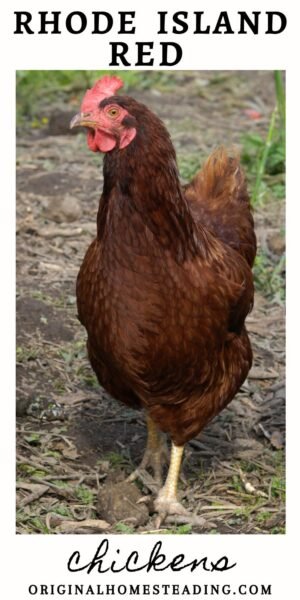
- Their feathers are a deep mahogany red, with some black on the tail and wings.
- Their eyes are red-orange.
- Their earlobes and wattles are red.
Temperament
Rhode Island Red chickens are known for their friendly and docile temperament. But, no matter what the breed, roosters might become aggressive and will defend their flock if they sense danger.

Egg Production
Rhode Island Red hens have an impressive rate of lay making them very productive breed to keep for egg production.
To Recap on Eggs:
- Egg Color is Medium Brown Shells
- 300+/- Eggs per year
Meat Production
These chickens are also good for meat. They have a plump body, but they grow slower than other meat birds. Still, they can provide a nice dinner or be used for stews.


Good Nest Boxes are a Must!
Housing and Confinement
When it comes to housing, Rhode Island Reds are relatively easy to care for.
If you’re raising Rhode Island Reds in a backyard setting, an adequate coop with a run is a must.
The run should be fenced in and covered to protect the chickens from predators. These birds also enjoy living in a free-range environment with plenty of area to scratch around in.


Favorite
homestead book

Favorite
oyster shell


Favorite
chicken sign
Feeding and Care
Rhode Island Reds are known for their ability to forage. But they still need a balanced diet to stay healthy and lay good eggs.
A diet of commercial feed supplemented with fresh fruits and vegetables is recommended. All chickens need fresh clean water and good feed. Make sure to take a look at:
In terms of care, Rhode Island Reds are relatively low-maintenance. They should be checked regularly for signs of illness or injury, and their coop and run should be cleaned regularly to prevent the buildup of old bedding which can cause disease.
Breeding
Breeding Rhode Island Reds is easy, but you need to choose healthy birds without genetic problems.
If you want to breed Rhode Island Reds, research the breeding process. This includes picking breeding stock, incubating eggs, and caring for the chicks.
Rhode Island Reds are an excellent choice for anyone wanting to raise chickens.

Rhode Island Red Chickens in a Flock
If you have Rhode Island Red chickens in your backyard, keep these points in mind:
Pecking Order
Rhode Island Reds, like other chickens, will create a pecking order. You might notice some fighting and pecking at first as they figure out who is in charge.
Foraging Habits
Rhode Island Reds enjoy foraging and searching for food. If you have a big yard, they will happily find bugs, seeds, and worms. However, you still need to give them commercial or homemade feed to meet their nutrition needs.
In short, Rhode Island Reds are a great choice for your backyard flock. They establish a pecking order and are good foragers, but they also need a safe coop and run.
Comparison with Other Chicken Breeds
RHODE ISLAND RED VS. ORPINGTON
Rhode Island Reds and Orpingtons are both good for meat and eggs, but they have some differences. Orpingtons are bigger and calmer than Rhode Island Reds.
Orpingtons also tend to go broody and want to hatch eggs. This can be enjoyable if you want to raise baby chicks!
However, Rhode Island Reds lay more eggs each year than Orpingtons.
RHODE ISLAND RED VS. AUSTRALORP
Australorps are known for their high egg production. They have black iridescent feathers and are slightly larger than Rhode Island Reds but otherwise quite similar.
Australorps are good at scratching and pecking around when they can roam freely. Their main characteristic is that they are excellent layers.
RHODE ISLAND RED VS. PLYMOUTH ROCK
Rhode Island Reds and Plymouth Rocks are also both popular dual-purpose breeds. Plymouth Rocks are larger than Rhode Island Reds. They typically have black and white feathers and a more docile temperament.
Plymouth Rocks are also good layers, but not as good as Rhode Island Reds. They are also better layers than Plymouth Rocks, producing more eggs per year.
RHODE ISLAND RED VS. COCHIN
Cochins are larger birds and tend to be calmer than Rhode Island Reds.
Like Orpingtons, Cochins can go broody. However, Rhode Island Reds are better layers than Cochins, producing more eggs each year.
In Summary:
Rhode Island Reds are friendly and adaptable birds. They lay eggs well and can handle cold weather.
Other popular dual-purpose breeds include Orpingtons, Australorps, Plymouth Rocks, and Cochins. Each of these breeds has its own unique traits that set them apart from Rhode Island Reds.
Rhode Island Red Chickens for Beginners
Overall, if you’re a beginner looking to raise friendly, relatively easy chickens that are suitable for both meat and egg production, the Rhode Island Red is a great choice
Another benefit of raising Rhode Island Reds is that they can adjust to a variety of climates.
When it comes to care, Rhode Island Reds are relatively low-maintenance. They can be fed a commercial feed, as well as healthy leftovers from your kitchen (that chickens can eat!)
Rhode Island Red Chickens: One of the Heritage Breeds
Heritage breeds of poultry are a great addition to any backyard or farm. The parents will produce chicks that look like them.
This is important if you want to raise chicks of a specific breed. Pure breeds have different genetics than crossbred birds.
If you want a heritage breed for shows, Rhode Island Red chickens are a good option.
Overall, Rhode Island Red chickens are a fantastic choice for anyone wanting a dual-purpose breed.
Frequently Asked Questions about Rhode Island Red Chickens
WHAT ARE THE PROS AND CONS OF RAISING RHODE ISLAND RED CHICKENS?
Rhode Island Red chickens are a popular choice for backyard flocks because of their dual-purpose nature. They tolerate a range of climates.
However, they can be aggressive towards other chickens and may require more space than other breeds. As with any breed, make sure to keep on eye for egg binding and mites.
Also, always use caution with all chickens especially around children as aggressive roosters can be found in any breed.
WHAT IS THE EGG PRODUCTION LIKE WITH RHODE ISLAND RED HENS?
Rhode Island Reds are great egg layers, producing up to 300 eggs a year. Young Rhode Island Red pullets usually start laying eggs at 5 to 6 months old.
Once they begin laying, they will keep producing eggs regularly for several years. They lay brown eggs, which can be medium or large, depending on the hen’s age.
WHAT IS THE TEMPERAMENT OF RHODE ISLAND RED CHICKENS?
Rhode Island Reds are typically friendly. However, some individual birds may be more aggressive.
It’s important to give them enough space to roam and forage to keep your flock happy. Always provide fresh feed and clean water as well.
WHAT ARE SOME OTHER DUAL-PURPOSE CHICKEN BREEDS BESIDES RHODE ISLAND REDS?
Rhode Island Reds are great dual-purpose chickens, but there are other good breeds too, like Plymouth Rocks, New Hampshire, and Sussex. Each breed has unique traits, so it’s important to choose one that suits your needs.
What Color Are Rhode Island Red Chicks?
Rhode Island Red chicks are a light reddish-brown color with some white fluff. They are very cute!
Where Can I Find Rhode Island Red Chickens for Sale?
You can buy Rhode Island Red chickens at hatcheries, farm supply stores, and online. Make sure to buy from a trusted source to get healthy birds that have been vaccinated. Some people prefer not to vaccinate their chicks, especially in disease-free areas.
Do Rhode Island Red Chickens Get Along with Other Breeds?
Always introduce new birds slowly to your flock. Watch their behavior closely after the introduction. Providing enough space and resources like food and water can help reduce aggression and promote harmony.

Final Thoughts on Rhode Island Red Chickens
Raising Rhode Island Red chickens can be a rewarding experience for both novice and experienced chicken enthusiasts.
key points to remember:
- Egg Production: Rhode Island Reds are great egg layers, producing about five to six large brown eggs each week during the peak season. You can sell any extra eggs to help pay for feed costs, creating extra income for your homestead.
- Meat Production: Rhode Island Reds are mainly known for laying eggs, but they also provide good meat. At the end of their laying season, you can use them as fryers, roasters, or stew hens for homegrown meals.
- Care Requirements: Like all chickens, Rhode Island Reds need proper care to thrive. Make sure they have fresh water, a safe coop from predators, and regular health checks.
- Breeding: If you want to breed Rhode Island Reds, choose healthy and diverse birds to ensure strong future generations. Work with a good breeder or join a local chicken club to learn about best breeding practices. Providing enough food and water can help reduce fighting and keep your flock peaceful.
Overall, raising Rhode Island Red chickens can be fun and enjoyable if you are willing to care for them properly.
They have friendly personalities, produce great eggs and meat, and are tough birds, making them a wonderful choice for any backyard flock.
more interesting chicken posts:
- So, When Do Chickens Start to Lay Eggs & How to Tell
- 13+ Things Chickens Should Not Eat
- Top Tips for Raising Chickens + Best Chicken Coop Ideas
- Tips for Raising Baby Chicks for Beginners
- How to Wash & Store Fresh Eggs | You’ll Be Surprised!